
Artist-made notebooks · 500+ exclusive covers · Every book helps fund education
0%

Floral Botanical Journals bring together practical stationery and imagery drawn from leaves, petals, and garden studies. In 2026, sourcing them well means checking more than attractive cover art. Buyers need to compare paper performance, print consistency, binding, minimum order quantities, and supplier reliability.

The market context is useful, but it needs careful interpretation. Grand View Research estimated the global stationery products market at about US$145.7 billion in 2022 and projected growth through 2030. That broad category includes many products, not just botanical journals. It signals commercial scale, not guaranteed demand for a particular design. For material claims, consult current Forest Stewardship Council and Programme for the Endorsement of Forest Certification guidance, then request traceable documentation from each supplier. A logo alone is not enough.

Details matter. Ask for a physical sample and test how fine-line fern illustrations reproduce on the chosen paper. Check whether ink shows through, whether the journal lies flat, and whether its corners survive ordinary handling. Request written specifications for paper weight, recycled content, printing, packaging, and lead times. Compare landed costs, not only unit prices. A low quote can hide costly freight or weak quality control.

There is no perfect checklist. A recycled stock may look less bright, and one printer’s color match may differ from another’s. Build time for revisions. This guide explains how to assess suppliers, verify claims, and source Floral Botanical Journals with fewer surprises.
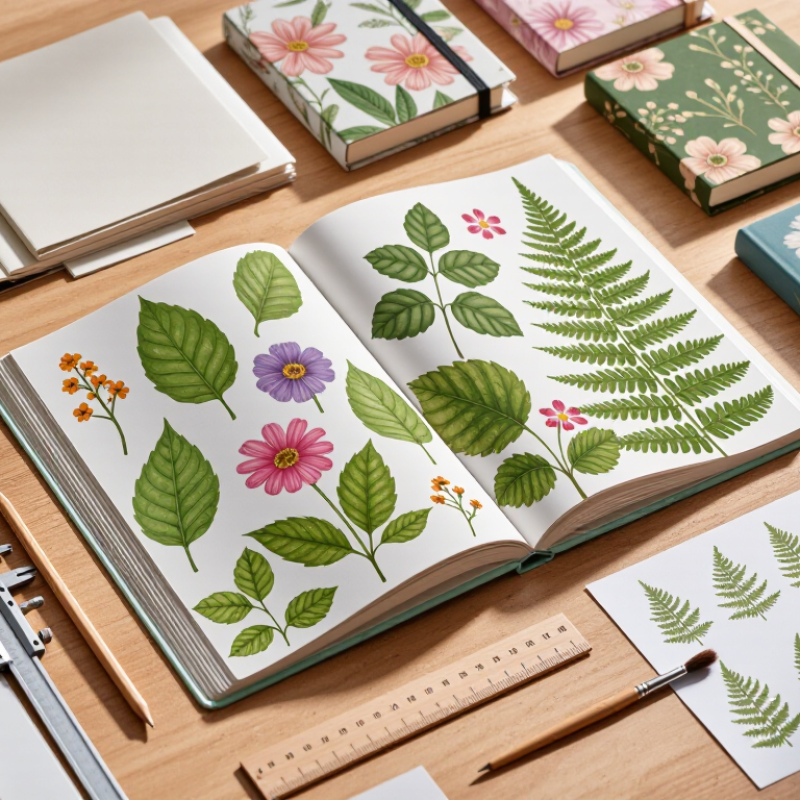
How to Source Floral Botanical Journals in 2026?

Define Archival Paper Specs: ISO 9706 pH 7.5–10 and 2% Alkaline Reserve

When sourcing floral botanical journals in 2026, treat paper specifications as a purchasing requirement, not a decorative claim. Ask suppliers for documentation showing compliance with ISO 9706, including a pH between 7.5 and 10 and an alkaline reserve of at least 2%, expressed as calcium carbonate equivalent. These figures help assess resistance to acid-related deterioration, but they do not guarantee that every ink or adhesive in the journal will remain stable. Request test results for the actual paper stock, not just a general product sheet.

Tips: Confirm whether the reserve is present throughout the paper. Ask how the pH and reserve were measured, and request a recent report tied to the production lot. Check that the paper’s weight and surface suit your intended use: fine botanical linework can look different on a lightly textured sheet than on a smooth one. Test a sample with your pens and watercolor washes. Small details matter.

For a journal expected to hold pressed-flower notes, sketches, or collected observations, check binding materials and storage guidance too. A compliant paper paired with acidic endpapers may be a weak choice. Look closely at sample pages under daylight; some sheets feel archival but feather with wet ink. I have found that supplier descriptions can be vague, and I would not rely on “acid-free” alone. Ask for evidence, then keep the answer with your purchase records.

Compare Journal Stocks by GSM, Recycled Fiber, and FSC Chain-of-Custody Status

When sourcing floral botanical journals in 2026, compare paper stocks beyond the figures on a specification sheet. GSM measures mass per square metre, not thickness, opacity, or writing performance. A 120–160 GSM sheet may suit pressed-flower sketches and light washes, but test the actual stock with your intended pens and paints. A heavier sheet can reduce show-through, yet may make a journal bulky and harder to bind. Test a real swatch. Look closely.

Recycled fiber can create a warmer shade, visible flecks, or a less uniform surface. These details may complement botanical illustrations, though they can shift between production batches. Request samples from the proposed run, not only a polished sample book. FSC chain-of-custody status is a separate check: ask for current documentation linking the paper product to an eligible certified supply chain. Keep the paperwork. A recycled-content claim does not, by itself, establish FSC certification, and certification does not guarantee a particular recycled percentage. Record the grade, GSM, fiber description, and verification details against each sample. I would not choose by the cleanest swatch alone; consistency matters, but a little paper variation can be part of the journal’s character.

Check Floral Image Rights Against Berne Convention’s 50-Year Minimum Copyright Term

When sourcing floral botanical journals in 2026, check each image’s rights separately from the journal’s text. A pressed iris plate may look centuries old, yet its reproduction could come from a later photograph or scan. Record the artist or photographer, creation date, publication date, and source. A journal’s age alone does not prove an image is free to reuse.

Berne’s familiar minimum is generally the author’s lifetime plus 50 years for protected works. But it is not a universal 50-year clock for every image. The Convention sets a separate minimum of 25 years from creation for photographic works; national laws may provide longer terms or different rules. Easy to overlook. Check the rules in the countries relevant to your publication and intended use, rather than relying on a date printed in the journal.

Ask a library or seller for rights documentation, and keep written permission or license records with your sourcing notes. Confirm that permission covers the specific use, such as a website, print run, or commercial edition. If authorship or dates are uncertain, flag the image for further review instead of guessing. I would not treat a promising attribution as proof; archives can be incomplete, and old catalog notes sometimes conflict.

Set Color-Proofing Criteria with ISO 12647 Graphic-Printing Standards

When sourcing floral botanical journals in 2026, ask how the printer applies the relevant part of ISO 12647 to its process. The series addresses print-process control, but the correct requirements depend on whether pages are produced by offset, digital, or another method. Get the process and paper stock in writing. A pale sage leaf can shift toward gray on an uncoated sheet, while warm cream paper may make white petals look yellow.

Set proofing criteria before approving production. Specify the intended color profile, ink or color separations, paper, viewing conditions, and agreed color tolerances. Ask for measured proof data, not just a pleasing screen preview. Check deep greens, delicate stem lines, and small areas of yellow pollen under consistent lighting. Keep an approved proof and record any stock or press changes. Those details make comparisons more reliable.

A standard helps control variation; it cannot restore detail missing from a low-resolution scan or make different papers look identical. I would not treat a pass as perfection. Botanical color is subjective, and even careful teams may disagree about one muted blossom. Decide which colors matter most, then judge the proof against those priorities.

Assess Supplier Samples for Paper Grain, Binding Quality, and Batch Consistency

For 2026, sourcing floral botanical journals means testing more than cover artwork. Ask suppliers for a physical sample made with the intended paper, finish, and binding. Hold it under daylight and warm indoor light. Cream paper can look yellow beside pale botanical inks. Check the paper grain by turning a page and observing how it bends. Smooth grain may support fine linework, while rough stock can soften small leaf details. Neither is automatically better. Match the surface to the artwork and writing use.

Use a fountain pen, pencil, and water-based marker on several pages. Note feathering, show-through, and drying time, then repeat near the center fold. Check whether pages lie open without forcing the spine. Tug gently at a few signatures; look for loose threads, uneven glue, or a stiff hinge. Tiny imperfections count. I would not reject a journal for one crooked leaf motif, but repeated misaligned pages can suggest weak process control. That distinction is easy to miss.

Batch consistency needs evidence beyond a polished sample. Request several units from a recent production run, not only a hand-selected prototype. Compare page shade, trim, cover placement, stitch tension, and printed colors side by side. Photograph them in the same light and record differences. Ask how paper lots and binding checks are documented, and whether inspection criteria are available. A sample can be lovely; the shipment may vary. Comparing only two units still leaves uncertainty, so request more when order volume makes variation costly.

FAQS

What paper specifications should I request for a botanical journal?

Ask for ISO 9706 documentation. The paper should have a pH of 7.5–10 and at least 2% alkaline reserve, expressed as calcium carbonate equivalent. Request results for the actual paper stock.

Does compliant paper guarantee long-lasting journal pages?

No. These specifications help assess resistance to acid-related deterioration, but they do not guarantee stable inks or adhesives. Check endpapers and binding materials too.

What should a paper test report include?

Request recent test results tied to the production lot. Ask how pH and alkaline reserve were measured, and whether the reserve runs throughout the paper. Keep the report with your purchase records.

How can I test paper with my drawing materials?

Try a fountain pen, pencil, water-based marker, and watercolor wash on several pages. Check feathering, show-through, and drying time, including near the center fold. Small details matter.

How do paper grain and surface affect botanical sketches?

Turn a page and watch how it bends. Smooth paper may suit fine leaf lines, while rough paper can soften tiny details. Neither is automatically better.

What should I inspect in a journal’s binding?

Check whether pages lie open without forcing the spine. Gently tug a few signatures and look for loose threads, uneven glue, or a stiff hinge. I still find this part easy to misjudge.

How can I check whether production batches are consistent?

Compare several units from a recent production run. Look at page shade, trimming, cover placement, stitching, and printed colors under the same light. One sample is not enough.

Is an “acid-free” description enough when choosing a journal?

I would not rely on that phrase alone. Request test evidence and inspect the actual pages. Some sheets feel archival but feather with wet ink. That can be disappointing.

Conclusion

Sourcing Floral Botanical Journals in 2026 starts with clear standards for paper, imagery, and print quality. Specify archival paper that meets ISO 9706, with a pH between 7.5 and 10 and a 2% alkaline reserve, then compare available stocks by weight in GSM, recycled-fiber content, and verified FSC chain-of-custody status. For floral illustrations and photographs, confirm that usage rights are documented and account for the Berne Convention’s 50-year minimum copyright term when assessing whether material may be used.

Before placing an order, establish color-proofing criteria aligned with relevant ISO 12647 graphic-printing standards. Review physical samples for paper grain, binding strength, and consistency across batches, not just appearance in a digital mock-up. A structured evaluation helps balance preservation, sustainability, image quality, and dependable production, so the finished journals meet both creative expectations and practical sourcing requirements.

Ethan

Ethan

Ethan is a dedicated marketing professional with a strong understanding of the company’s products, services, and customer needs. Through years of experience in market research, content strategy, and business communication, he has developed the ability to translate complex product features into......