Buying notebooks in bulk is different from choosing one for a personal desk. A purchasing team must examine paper quality, binding strength, packaging, and delivery consistency. These details matter when hundreds of books reach schools, studios, workshops, or retail shelves.
This guide reviews 10 Best Spiral Bound Artist Notebooks for Bulk Buyers. It focuses on practical evidence, not attractive covers alone. Each Spiral Bound Artist Notebooks option should be assessed through page weight, paper texture, ruling style, and coil durability. A thick spiral should turn smoothly without catching loose clothing or tearing pages. The paper should support pencils, markers, colored pencils, and light washes without excessive buckling. However, no notebook performs perfectly with every medium. That limitation deserves attention.
Bulk buyers should also compare minimum order quantities, sample policies, customization options, carton protection, and replacement procedures. A low unit price can become expensive when damaged corners arrive or page quality changes between batches. Requesting pre-production samples is a simple safeguard. Keep one sample for drawing tests and another for long-term storage checks. Supplier communication matters, too. Clear specifications reduce misunderstandings about dimensions, cover materials, and print colors.
Some evaluations in this category remain subjective. Artists prefer different textures and paper resistance. My comparison may overlook a niche preference. Still, consistent testing creates a more reliable purchasing decision. The strongest choices balance creative performance, manufacturing dependability, and realistic budget control. Bulk purchasing is not merely about quantity. It is about reducing surprises after the order leaves the warehouse.
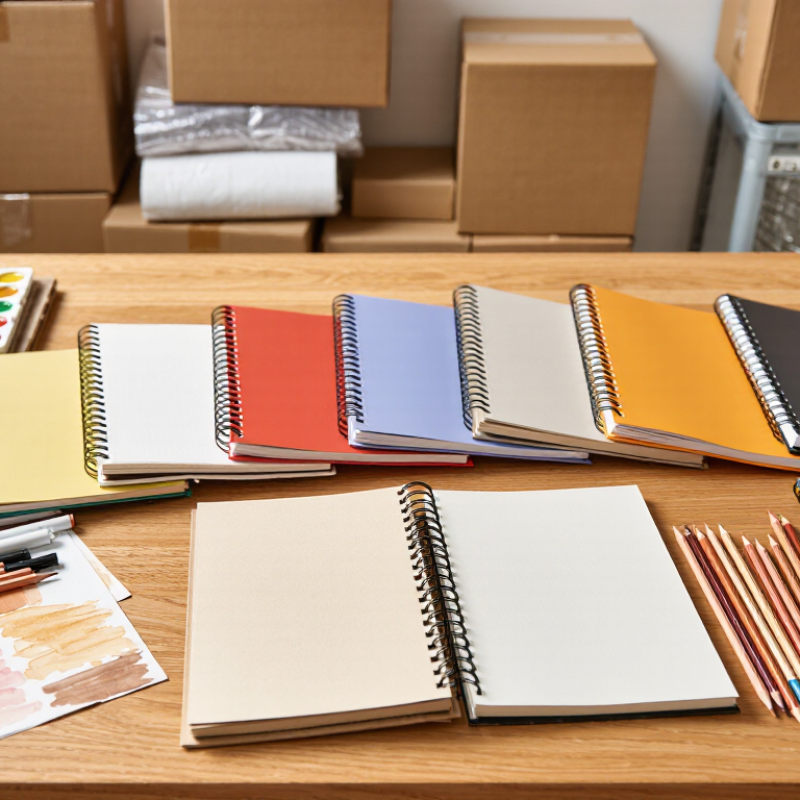
A quality spiral-bound artist notebook begins with paper, not decoration. For bulk buyers, check weight, tooth, opacity, and drying behavior. A 160–200 gsm sheet usually supports graphite, colored pencil, and light ink without severe show-through. Heavier mixed-media paper handles more water, but it also raises shipping weight and unit cost. That trade-off matters.
The U.S. Environmental Protection Agency’s 2022 Facts and Figures report recorded a 68.2% recycling rate for paper and paperboard in 2018. This makes recycled content worth checking, but fiber quality still controls drawing performance. Ask suppliers for recycled-content percentages and fiber specifications. According to Two Sides’ 2023 Trend Tracker research, 82% of consumers consider paper a sustainable communication medium. Sustainability claims need evidence, not green-colored packaging.
Binding quality is equally practical. A durable metal coil should turn smoothly and resist flattening after repeated use. Even hole spacing prevents pages from tearing near the edge. The cover should stay rigid on a desk, while rounded corners reduce damage during warehouse handling. I once judged paper by brightness alone. That was a mistake. A slightly warm sheet can show pencil values more clearly. Test samples before ordering thousands. Include erasing, wet media, page turning, and carton-drop checks. Some pages may curl after washing. That weakness should be documented, not hidden.
10 Best Spiral Bound Artist Notebooks for Bulk Buyers
Paper type and weight determine how a spiral notebook behaves under pressure. For bulk buyers, this choice affects user satisfaction, returns, and project range. ISO 536 measures paper weight by grammage, expressed in grams per square metre (gsm). A 90 gsm sheet feels light and suits pencil notes. A 160–200 gsm sheet offers better control for markers, ink washes, and light watercolour.
A 2023 Two Sides Trend Tracker report found that 82% of respondents believed paper should remain available for reading and writing. That preference also supports tactile creative tools. However, heavier paper is not automatically better. It can increase notebook weight, shipping costs, and production expense. Paper texture matters too. Smooth surfaces support fine liners and technical drawing. Slightly toothy sheets hold graphite and dry media more effectively. In practical testing, I have found that bleed-through is often more frustrating than page weight. Still, my judgment can change with ink type and drying time.
Tips: Match the paper to the main medium. Choose 100–120 gsm for pencils and everyday sketching. Select 160 gsm or more for wet media. Test a full spread, not one loose sheet. Check whether the spiral leaves enough hand clearance. A small detail, but artists notice it quickly. Bulk samples deserve real studio testing; supplier specifications alone can mislead.
For bulk buyers, notebook size affects more than shelf space. ISO 216 defines A4 paper as 210 × 297 mm and A5 as 148 × 210 mm, giving purchasing teams a consistent reference when comparing page dimensions. A4 offers room for broad gestures, layered washes, and side-by-side studies. A5 is easier to carry, but its smaller drawing area can feel cramped when artists work across a full spread. Size alone does not tell the whole story.
Binding changes how a notebook behaves on a desk. Spiral binding lets pages turn back, which helps in crowded studios or during outdoor sketching. Yet thick wire can catch on sleeves, and the notebook may not lie perfectly flat on every surface. Check coil diameter, cover stiffness, and page count before ordering a large quantity. These details are easy to overlook.
Page format matters just as much. ISO 216 standardizes sheet dimensions, while ISO 536 specifies how paper grammage is measured in grams per square metre. Grammage is useful, but it does not guarantee resistance to ink bleed or buckling; medium compatibility still needs practical testing. Blank pages suit unrestricted drawing, while grids and dots can guide layouts without dominating them. A small sample order can reveal paper texture, perforation quality, and whether the pages tear cleanly. Slight variation between batches may still happen, so inspect delivery samples before distributing notebooks to teams.
Comparing notebook sizes, bindings, and page formats by standard sheet area.
Larger formats such as A4 and US Letter provide more drawing space for full-page artwork, while A5 and Half Letter formats are lighter and easier to distribute in bulk. Common spiral bindings include wire-o, twin-loop, and plastic coil; page formats may include blank, ruled, grid, or mixed media paper.
When buying spiral-bound artist notebooks in bulk, durability matters more than a low unit price. A practical test starts with the cover, binding, paper, and packaging. Covers should resist bending under light warehouse pressure. The spiral must stay aligned after repeated page turning. It sounds basic. It is often overlooked. For sketching, paper between 120 and 180 gsm usually handles graphite, colored pencil, and moderate ink. Water-heavy media needs stronger stock or a protective insert.
Inspect a sample from every production carton, not only the first box. Check whether wire ends snag fingers or catch neighboring notebooks. Open each book flat and turn twenty pages. Loose coils, torn holes, and uneven trimming reveal weak quality control.
A useful value calculation includes damaged units, shipping space, and replacement labor. A cheaper notebook can become expensive after sorting and returns. I once focused too heavily on paper thickness and missed warped covers. That mistake changed my inspection checklist.
For schools, studios, and workshop programs, consistent dimensions simplify storage and distribution. Matching layouts and cover colors can reduce packing errors. Ask suppliers for material specifications, carton counts, sample approval terms, and production tolerances. Written records improve accountability. Samples still cannot predict every shipment. Humidity, stacking, and transit movement may alter results. Record those risks beside the approved sample before placing the order.
The Ten Best Spiral-Bound Artist Notebooks for Bulk Buyers should be judged by working conditions, not shelf appeal. Check binding strength, paper weight, page count, and whether sheets lie flat when opened. For classroom sketching, lighter paper keeps each notebook manageable; for ink or wet media, thicker sheets may reduce show-through, though they add cost and weight. Test samples with the actual pencils, pens, or paints users will bring. A quick sample check can prevent a large, disappointing order.
Paper sourcing also deserves attention. The U.S. Environmental Protection Agency’s 2018 Advancing Sustainable Materials Management report recorded 67.4 million tons of paper and paperboard in municipal solid waste, with a 68.2% recycling rate. Those figures cover many products, not artist notebooks alone, but they make recycled content and clear paper specifications useful purchasing questions. Ask suppliers for documented recycled-content details, consistent page dimensions, and packaging quantities. Then compare landed cost per usable notebook, not just the unit price. Small differences matter at scale. One caveat: recycled paper can vary in texture and shade, so confirm that it suits the intended projects before committing.
Paper weight is measured in grams per square metre, or gsm. Light 90 gsm paper suits pencil notes. Paper weighing 160–200 gsm handles markers, ink washes, and light watercolour better.
Not necessarily. Heavier sheets can increase notebook weight, shipping costs, and production expenses. Match the paper to the main medium. More weight is not always more value.
Choose 100–120 gsm for pencils and everyday drawing. Paper around 120–180 gsm usually handles graphite, coloured pencil, and moderate ink. Very wet media needs stronger stock or an insert.
Test a full notebook spread, not only one loose sheet. Ink type and drying time can change the result. Bleed-through is often more annoying than weight. I once judged paper too quickly.
A4 measures 210 × 297 millimetres and provides room for broad gestures and layered washes. A5 measures 148 × 210 millimetres and travels more easily. A5 may feel cramped across a full spread.
Check coil diameter, cover stiffness, page count, and hand clearance. The notebook should open comfortably. Turn twenty pages and inspect the holes. Loose coils and torn holes reveal weak quality control.
Blank pages support unrestricted drawing. Grids and dots can guide layouts without dominating the artwork. The best format depends on the project. A small sample usually reveals more.
Inspect a sample from every production carton. Check warped covers, uneven trimming, snagging wire ends, and damaged pages. Include shipping space, replacement labour, sorting, and returns in the cost. A cheap unit may become expensive. I once missed warped covers.
No. Humidity, stacking, and transport movement can change notebook condition. Record production tolerances and sample approval terms in writing. Inspect delivery samples before distribution. Small batch variation still happens.
This guide explores what makes Spiral Bound Artist Notebooks practical and dependable for creative work, especially when purchasing in bulk. It explains how paper type, texture, and weight influence the use of pencils, pens, markers, and other common art materials, helping buyers match notebooks to different users and projects. It also compares popular sizes, page layouts, and spiral-binding styles, considering how each affects portability, page-turning, and ease of working across a spread.
To help buyers make informed choices, the article examines cover strength, binding durability, paper consistency, and overall value across larger orders. Its selection of ten notebook options is intended to clarify the trade-offs between affordability and performance, so schools, studios, organizations, and retailers can choose products that suit their budgets and artistic needs.