
Artist-made notebooks · 500+ exclusive covers · Every book helps fund education
0%

For global buyers, 2026 will make Classic Layflat Journals more than attractive stationery. They must perform reliably across writing habits, climates, and supply chains. A journal may look elegant online, yet feel stiff beside a café window. Its pages should open smoothly, remain flat, and resist tearing during daily use.

Bookbinding author Keith A. Smith describes the practical goal clearly: “A book should open and stay open.” This simple principle remains valuable when comparing layflat construction, paper weight, cover strength, and binding consistency. Buyers should inspect whether the journal opens fully without stressing the spine. They should also check if ink feathers on uncoated paper, especially with fountain pens or markers.

Small details matter.

This guide reviews leading Classic Layflat Journals for international buyers in 2026. It considers writing comfort, manufacturing quality, customization options, packaging, and order flexibility. Recycled paper and responsible sourcing also deserve attention, but environmental claims require evidence, not attractive labels. Certifications, material disclosures, and supplier documentation can reveal the difference.

No journal is perfect.

A very thick notebook may offer generous capacity but become heavy for travel. A soft cover may feel pleasant but provide less protection in transit. Regional preferences also complicate the decision. Some customers value minimal design, while others expect pockets, elastic closures, or numbered pages.

The strongest choice depends on use, budget, and verified production standards. This overview aims to help distributors, retailers, and corporate buyers compare those factors with greater confidence.
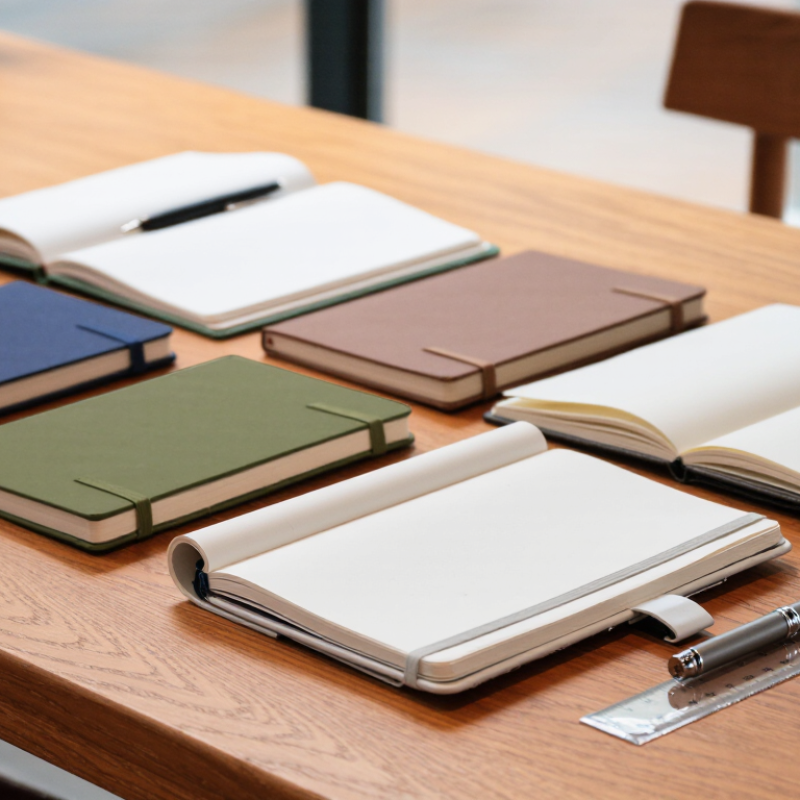
2026 Top Classic Layflat Journals for Global Buyers?

What Makes a Layflat Journal Classic in 2026

What Makes a Layflat Journal Classic in 2026

A classic layflat journal begins with function, not decoration. Its pages open nearly flat without cracking, forcing, or hiding the inner margin. Experienced buyers should inspect the binding, paper grain, stitching, and cover board together. A strong sewn structure supports repeated opening. A flexible spine improves writing comfort. It should also remain stable on a desk, even with one hand.

Paper quality matters more than many product photos suggest. Smooth, opaque paper reduces ink show-through and supports handwriting, sketches, and planning. ISO 9706 provides a useful reference for permanent paper performance, including aging resistance and alkaline reserve.

CEPI reported Europe’s paper recycling rate at 79.3% in 2023. Responsible sourcing now affects classic design decisions, not only sustainability claims. Recycled content can be valuable, but texture and opacity must be tested.

Market estimates vary, which deserves caution. Recent stationery reports identify personalization, premium paper, and durable construction as continuing demand factors. Still, a “premium” label proves little. Global buyers should request paper specifications, binding samples, color checks, and packaging tests. Check the journal at 180 degrees. Write near the gutter. Test it under dry and humid conditions. Imperfections happen, even in well-controlled production. A slightly uneven edge may be harmless, while weak thread tension can shorten the product’s life. In 2026, classic means dependable, repair-conscious, and quietly practical.

Key Materials, Binding Styles, and Paper Qualities

2026 Top Classic Layflat Journals for Global Buyers

Key Materials, Binding Styles, and Paper Qualities

For global buyers, classic layflat journals should balance durability, writing comfort, and production consistency. Cover materials often include coated paper, linen-textured fabric, recycled board, or synthetic leather. Paperboard thickness affects rigidity and shipping weight. A strong cover protects pages but may increase freight costs. Inner paper also needs careful testing. Acid-free, wood-free sheets usually resist yellowing and support long-term writing. Different users prefer different textures. Smooth paper suits pens, while lightly textured paper feels better with pencils.

Tips: Request physical samples before placing a large order. Check ink drying, page turning, cover flexibility, and corner strength. Test several pen types, including gel, ballpoint, and fountain pens. Ask suppliers for paper weight, fiber composition, moisture control, and tolerance details. Small differences can affect the final experience.

Binding style shapes the journal’s daily usability. Sewn binding usually opens more naturally and holds pages securely. Section-sewn construction may offer better durability than basic adhesive binding. Spiral options provide excellent flexibility, but they can look less traditional. Layflat performance depends on both binding and paper thickness. I have seen attractive samples fail during repeated opening tests. That weakness is easy to miss. Buyers should inspect spine recovery, page alignment, and adhesive marks. A clear specification sheet improves reliability, although it cannot replace real handling.

Top Classic Layflat Journal Types for Global Buyers

Top Classic Layflat Journal Types for Global Buyers

Classic layflat journals usually fall into three practical types: sewn binding, wire-bound, and flexible disc-style binding. Sewn journals open smoothly because their signatures are stitched together. They suit writing, sketching, and archival use. Wire-bound journals fold back completely, which helps users working at narrow desks. However, exposed wires can snag during packing or shipping. Flexible disc systems offer easy page movement, but their parts may loosen with heavy daily use.

Paper selection matters as much as binding. Buyers should test fountain pens, gel pens, and markers before confirming production. A 100 to 120 gsm paper often balances writing comfort with shipping weight. Thicker stock feels premium, yet it can increase freight costs. Recycled paper may show more texture or color variation. That is not always a defect. It can become a quality concern when buyers expect a uniform white surface.

I have seen samples perform well in dry offices but warp in humid storage rooms. Climate testing is worth adding to the approval process. Ask for stitching samples, page-opening videos, paper specifications, and packaging measurements. Request batch-control records when consistency matters. Small details matter. A journal that opens flat but closes poorly may frustrate users. I once underestimated the effect of a rigid cover on overseas packing. The corners arrived compressed. That mistake changed how I review both binding and carton protection.

2026 Top Classic Layflat Journals for Global Buyers

Top classic layflat journal types compared by standard finished size

A5 is a compact option for everyday writing, ISO B5 provides additional workspace while remaining portable, A4 supports detailed notes and illustrations, and US Letter is widely used in North American markets. Dimensions are standard finished paper sizes shown in millimetres; binding, cover thickness, and bleed may change the final product size.

How to Compare Manufacturers, Features, and Custom Options

2026 Top Classic Layflat Journals for Global Buyers

Comparing manufacturers starts with evidence, not polished sample covers. Grand View Research projects steady growth in the global notebooks market through 2030, driven by premium paper goods and personalization. That growth attracts capable factories and inconsistent suppliers. Request production photos, paper certificates, binding samples, and recent export references. A factory should explain its paper weight, moisture control, stitching method, and quality checks clearly. Vague answers are warning signs.

Layflat performance depends on construction. Check whether pages open flat at 180 degrees without forcing the spine. Test writing near the gutter, where weak binding becomes obvious. Compare thread-sewn, glued, and hybrid structures. Thread sewing usually supports durability, but it can increase cost and production time. Ask for page-count tolerance and cover-board measurements. Small differences matter.

Custom options should match the buyer’s market, not only the factory’s machine list. Compare foil stamping, debossing, edge coloring, pen loops, pockets, elastic closures, and recycled papers. Two Sides’ 2023 Trend Tracker found that 82% of consumers considered paper and cardboard sustainable materials. Still, sustainability claims need proof. Request recycled content data and recognized certification documents. I would also test ink rub resistance after shipping. It is an easy detail to miss. A beautiful prototype can fail in a humid warehouse. Procurement teams should compare landed cost, minimum order quantity, lead time, packaging, and replacement terms in one worksheet. Perfect comparisons are rare. Clear records are better.

Global Buying Factors: Pricing, Orders, Shipping, and Compliance

2026 Top Classic Layflat Journals for Global Buyers?

For global buyers, journal pricing starts with paper quality, page count, binding, cover material, and finishing. A recycled paper interior may support sustainability goals, but its texture can affect writing performance. Request a detailed quotation, not only a unit price. Include sample costs, tooling, packaging, inspection, and payment terms. Landed cost matters more than factory price. A cheap quote can age badly.

Order planning should match sales forecasts and storage capacity. Ask about minimum order quantities, sample approval, production lead time, and acceptable defect rates. A practical order may begin with a small trial batch. It reveals color variation, spine flexibility, and page alignment. I have seen buyers overlook carton dimensions. That mistake increased warehouse fees. Confirm pallet patterns and carton weights before production. Keep written approval records for every change.

Shipping decisions affect both cost and product condition. Use moisture-resistant inner packaging when journals cross humid routes. Confirm shipping terms, port responsibilities, tracking documents, and insurance coverage. Compliance also needs careful review. Check paper claims, inks, adhesives, packaging labels, product safety rules, and import documentation for each destination. Requirements can change. Do not rely on an old checklist. Obtain current guidance from customs authorities or a qualified trade specialist. Product descriptions should be accurate and consistent across invoices, cartons, and shipping documents. Small discrepancies can delay clearance. Mistakes happen, so build time into the launch schedule.

2026 Top Classic Layflat Journals for Global Buyers
Global Buying Factors: Pricing, Orders, Shipping, and Compliance

The figures below are practical purchasing benchmarks for custom classic layflat journals. Prices are indicative FOB ranges in USD and vary according to paper, cover material, page count, printing, packaging, order volume, and destination. Buyers should confirm the final quotation, production schedule, freight rate, and regulatory requirements before placing an order.

Journal Configuration Typical Size Page Range Binding and Cover Indicative FOB Unit Price Practical MOQ Typical Production Lead Time Best-Fit Buyer Segment Main Buying Considerations
A5 Hardcover Layflat Journal 148 × 210 mm 160–240 pages Thread-sewn or section-sewn binding; 2.0–2.5 mm board; paper, linen, or coated cover $1.80–$4.20 per unit 500–1,000 units 25–40 days after artwork approval Bookstores, stationery wholesalers, corporate gifting programs Strong balance between portability, perceived value, freight efficiency, and retail appeal
A5 Soft-Touch Layflat Journal 148 × 210 mm 120–200 pages Flexible cover with matte film, soft-touch coating, or uncoated textured paper $1.10–$2.80 per unit 500–1,000 units 20–35 days after artwork approval Promotional distributors, subscription boxes, school and office retailers Lower packed weight and lower entry cost; coating durability should be tested before mass production
B5 Premium Layflat Journal 176 × 250 mm 192–320 pages Thread-sewn binding; rigid cover; optional foil stamping, ribbon marker, and elastic closure $2.80–$6.50 per unit 500–1,000 units 30–45 days after artwork approval Premium stationery retailers, professional users, gift and lifestyle channels Higher writing area and stronger premium positioning, but higher carton volume and freight cost
Pocket Layflat Journal 90 × 140 mm to 105 × 148 mm 80–160 pages Flexible or semi-rigid cover; sewn, glued, or hybrid layflat construction $0.65–$1.80 per unit 1,000–2,000 units 20–35 days after artwork approval Travel retailers, event merchandise programs, convenience and impulse channels Very efficient for small parcels; usable writing area and spine durability must be checked carefully
Recycled-Paper Layflat Journal A5 or 160 × 230 mm 120–240 pages Recycled or responsibly sourced paper; uncoated cover; water-based or low-VOC printing options $1.40–$3.80 per unit 1,000–2,000 units 25–45 days after artwork approval Eco-focused retailers, museums, educational organizations, sustainability programs Request material certificates, recycled-content evidence, ink specifications, and accurate environmental claims
Leatherette Executive Journal A5 or B5 160–240 pages PU or synthetic leatherette cover; sewn binding; pen loop, pocket, elastic band, or magnetic closure $3.20–$8.50 per unit 500–1,000 units 30–50 days after artwork approval Corporate procurement, conference organizers, executive gift distributors Cover material composition, odor, abrasion resistance, closure strength, and packaging presentation affect acceptance
Custom-Printed Retail Journal Buyer-specified; commonly A5 96–240 pages Custom interior pages, printed endpapers, cover artwork, optional belly band or gift box $1.50–$5.50 per unit 1,000–3,000 units 30–55 days after final proof approval Private-label retailers, publishers, cultural institutions, online sellers Color consistency, proof approval, barcode placement, packaging specifications, and inspection standards are critical
Global Buying Factor Recommended Benchmark or Requirement Why It Matters Buyer Action Before Order Confirmation
Quotation Basis Compare prices on the same basis: EXW, FOB, CIF, or DDP; confirm whether tooling, sampling, packaging, and inspection are included Different Incoterms can make apparently similar quotations non-comparable Request a line-item quotation showing product cost, setup cost, packaging, inland transport, and freight separately
Order Quantity Use a pilot order of 500–1,000 units for a new design; larger runs usually reduce unit cost Paper, printing setup, binding setup, and packaging are spread across more units at higher volumes Ask for price breaks at 500, 1,000, 3,000, and 5,000 units
Payment Terms Common arrangements include a deposit before production and the balance before shipment or against agreed shipping documents Payment timing affects cash flow, production release, and shipment control Define deposit percentage, balance trigger, currency, bank charges, and refund or cancellation terms in writing
Sample Approval Approve a physical pre-production sample or a digitally controlled proof before bulk manufacturing Layflat performance, cover color, paper shade, foil position, and print registration are difficult to judge from artwork alone Record approved paper, cover, color, dimensions, page order, binding performance, and finishing details
Quality Inspection Use agreed AQL or defect criteria; inspect dimensions, page count, print quality, binding, cover finish, and packaging Visible defects and weak binding can create returns, retailer claims, and reputational cost Specify acceptable limits for scuffing, misalignment, loose pages, glue marks, damaged corners, and carton defects
Shipping Method Sea freight is generally most economical for commercial volumes; air freight is faster but substantially more expensive Journals are dense products, so freight cost is influenced by both gross weight and carton volume Request carton dimensions, units per carton, gross weight, total cubic volume, and estimated transit time
Shipping Documents Commercial invoice, packing list, transport document, and any destination-specific origin or product documents Incomplete or inconsistent documents can delay customs clearance Confirm consignee details, HS classification with the customs broker, country-of-origin wording, and document deadlines
Packaging Protection Use moisture-resistant inner protection, strong export cartons, corner protection, and clear carton markings Paper products can suffer from moisture, compression, abrasion, and corner damage during international transport Approve a packaging specification and perform a carton drop or compression check for larger orders
Paper and Chemical Compliance Request paper specifications and, where required, testing for restricted substances, heavy metals, and applicable chemical limits Requirements vary by destination and by whether the item is sold as stationery, a gift, or a product for children Confirm the destination market, intended age group, ink and coating details, and required test reports before production
Environmental Claims Substantiate claims such as recycled content, responsibly sourced fiber, recyclable packaging, or plastic-free construction Unverified environmental claims may create regulatory and retailer compliance risks Collect supplier declarations, chain-of-custody documents where applicable, recycled-content evidence, and packaging material details
Product Safety Scope Ordinary adult stationery may face different rules from products marketed to children or used with accessories Marketing language and intended use can change the applicable safety and testing obligations Review the product description, packaging text, warning statements, age claims, and destination-market rules with an importer or compliance adviser
Landed-Cost Planning Calculate product price plus packaging, freight, insurance, duties, brokerage, taxes, warehousing, and inspection FOB or EXW pricing alone does not show the actual cost of selling in the destination market Prepare a landed-cost model for each target country before selecting the final journal configuration
Reorder Planning Allow additional time for paper procurement, seasonal capacity, port congestion, customs, and last-mile delivery Retail launches and promotional campaigns can be disrupted by late replenishment Set a reorder point based on sales velocity, safety stock, supplier lead time, and destination transit time

FAQS

Which cover materials suit classic layflat journals?

Common choices include coated paper, linen-textured fabric, recycled board, and synthetic leather. A strong cover protects pages. However, thicker boards can increase shipping weight and cost.

What paper qualities should buyers check?

Acid-free, wood-free paper usually resists yellowing over time. Smooth paper works well with pens. Lightly textured paper feels better with pencils. Test both before deciding.

How should buyers test writing performance?

Request physical samples before placing a large order. Use gel, ballpoint, and fountain pens. Check ink drying, smearing, and writing near the gutter. Small differences matter.

Which binding style offers the best durability?

Thread-sewn binding usually opens naturally and holds pages securely. Section-sewn construction can outlast basic adhesive binding. Spiral binding offers flexibility but looks less traditional. No option is perfect.

How can buyers confirm true layflat performance?

Open the journal to 180 degrees without forcing the spine. Inspect page alignment, spine recovery, and adhesive marks. Repeat the test many times. Some attractive samples fail.

What should buyers request from manufacturers?

Ask for production photos, paper certificates, binding samples, and export references. Request paper weight, fiber composition, moisture controls, and tolerance details. Vague answers deserve caution.

Which custom features are practical for different markets?

Options may include foil stamping, debossing, edge coloring, pen loops, pockets, and elastic closures. Choose features based on user needs. A long feature list can increase cost and production time.

How should buyers evaluate sustainability claims?

Request recycled-content data and recognized certification documents. Do not rely only on printed claims. Test packaging and paper after humid storage. I would verify everything twice.

What costs should procurement teams compare?

Compare landed cost, minimum order quantity, lead time, packaging, and replacement terms. Record everything in one worksheet. A perfect comparison is unlikely. Clear records are better.

Conclusion

In 2026, Classic Layflat Journals combine timeless visual appeal with practical, durable construction. Their defining features include pages that open fully flat, balanced proportions, refined cover materials, dependable binding, and paper selected for smooth writing, sketching, or mixed-media use. Global buyers can explore hardcover, softcover, fabric-wrapped, recycled, minimalist, and premium journal types, each suited to different customer preferences, retail positions, and usage scenarios. Binding strength, page flexibility, paper weight, opacity, texture, and compatibility with various pens are important considerations when evaluating quality.

Choosing the right manufacturer requires comparing production experience, material consistency, customization capabilities, sampling processes, packaging, and quality control. Buyers should also review minimum order quantities, tiered pricing, production schedules, shipping arrangements, payment terms, and documentation requirements. Sustainable material options, responsible packaging, accurate product labeling, and compliance with destination-market standards can support smoother international purchasing. By balancing design, performance, customization, and total landed cost, businesses can select Classic Layflat Journals that deliver lasting value across diverse global markets.

Amelia

Amelia

Amelia is a dedicated marketing professional with a deep understanding of the company’s products, services, and customer needs. With a strong combination of industry knowledge, communication skills, and strategic insight, she helps translate complex product features into clear, practical value for......