
Wholesale buyers need more than attractive covers when selecting Embroidered Fabric Journals. They need dependable quality, practical pricing, and suppliers who communicate clearly. A journal may look beautiful in a product photograph, yet its stitching can loosen after repeated handling. That difference matters when retailers receive hundreds of units.
This guide reviews ten Embroidered Fabric Journals for wholesale purchasing. It considers cover materials, embroidery detail, paper weight, binding strength, writing comfort, customization options, minimum order quantities, and lead times. It also examines packaging, because crushed corners and loose threads can create avoidable costs. Small details count.
Real buying decisions are rarely perfect. A lower price may reduce fabric quality. A highly detailed design may require longer production. Some suppliers may offer flexible samples but limited color choices. Buyers should request physical samples, confirm production tolerances, and compare final costs before placing larger orders. Written specifications can prevent misunderstandings.
The selected journals suit different retail settings, including gift shops, stationery stores, museums, hotels, and lifestyle boutiques. Floral stitching may appeal to traditional shoppers, while geometric patterns can fit modern displays. Recycled paper, cotton covers, and regional motifs may also support a stronger product story, provided supplier claims are verified.
This is not a universal ranking. It is a practical starting point. Product suitability depends on audience, budget, sales channel, and expected order volume. Careful buyers should still test durability, inspect embroidery edges, and review supplier reliability. A beautiful journal must also arrive consistently, safely, and on time.
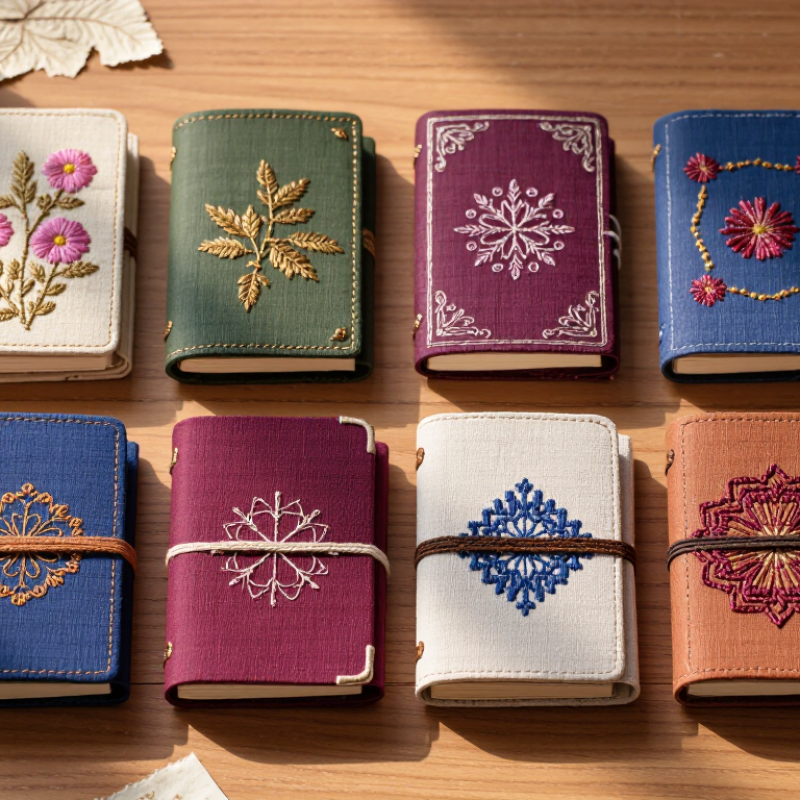
Embroidered fabric journals combine a paper writing block with a stitched textile cover. The cover may feature cotton, linen, recycled fabric, thread patterns, or padded construction. Unlike ordinary notebooks, they add touch, texture, and visible craftsmanship. Buyers can use them for gifts, event merchandise, hotel stationery, or curated retail collections.
Market data supports the wider stationery opportunity. Grand View Research estimated the global stationery products market at USD 90.6 billion in 2023, with continued growth projected through 2030. This figure does not prove demand for embroidered journals, but it shows a substantial category for wholesale testing. Textile Exchange reported that global fiber production reached 124 million tonnes in 2023. Therefore, material choice deserves careful review, especially when buyers request recycled or lower-impact fabrics. Claims need evidence. Vague sustainability language can weaken trust.
Wholesale buyers usually choose these journals for their perceived value and flexible presentation. A dense cover, clean stitching, and smooth paper can justify a higher selling price. Practical checks matter more than attractive samples. Inspect thread tension, corner durability, page alignment, odor, and packaging damage. Ask for fabric composition and colorfastness information. Small defects become expensive across hundreds of units. Not every customer wants ornament. That assumption needs testing through samples, buyer feedback, and modest initial orders.
For wholesale buyers, a high-quality embroidered fabric journal begins with dependable materials. The cover should use tightly woven cotton, linen, or another durable textile. Loose threads often signal weak finishing. They also create problems during transport. Inspect the embroidery from both sides. Clean stitches, even spacing, and secure thread ends show careful workmanship. Small details matter.
The journal should open flat without stressing the spine. Reinforced stitching usually performs better than thin adhesive binding. Inside pages need consistent cutting, smooth edges, and enough thickness for pens, markers, or light watercolor use. Paper weight matters. A useful sample test includes writing on both sides and checking for ink bleed. I have found that attractive covers cannot compensate for poor paper quality. That mistake is easy to make.
Wholesale buyers should also check colorfastness, odor, moisture protection, and packaging strength. Rub a damp white cloth across the embroidery. Excess dye indicates a quality concern. Measure the journal, count the pages, and compare every sample with the supplier’s specifications. A small measurement difference can affect shipping cartons and shelf presentation. Ask for production samples before placing a large order. Even experienced buyers sometimes overlook thread tension or corner alignment. Those defects may seem minor individually, but repeated across hundreds of journals, they affect customer trust. QC records and clear replacement terms add practical reliability.
The chart presents a practical 100-point wholesale evaluation model for embroidered fabric journals. Material durability, embroidery quality, paper performance, binding strength, customization flexibility, and packaging readiness are the main features that define a high-quality product. The weighting reflects their typical impact on product longevity, retail presentation, and bulk-order suitability.
When comparing the ten best embroidered fabric journals for wholesale, examine more than their decorative covers. In my purchasing experience, embroidery density reveals construction quality. Loose threads may appear attractive but often catch during packing. Check the fabric backing, stitch tension, and corner finishing by hand. Small flaws matter.
Paper quality deserves equal attention. Compare page thickness, texture, ruling, and ink show-through across all ten journals. A 100–120 gsm paper range often feels practical for everyday writing, but buyer preferences differ. Test each binding by opening the journal flat several times. Watch for cracked spines or pages pulling away. I once chose a journal for its vivid embroidery and ignored its weak binding. That shortcut was wrong.
Wholesale comparison also requires clear commercial evidence. Request samples before approving large quantities. Record dimensions, unit weight, packaging method, minimum order quantity, and production lead time. Ask whether colors and thread patterns remain consistent between batches. Cost alone can mislead. A cheaper journal may create higher expenses through damaged cartons, uneven stitching, or slow inspection. Supplier communication is another useful measure. Reliable answers should include material details, realistic delivery estimates, and a process for handling defects. Keep written records. They protect decisions and improve later orders. Be careful with customization promises. Complex embroidery may require longer sampling and increase waste. The most suitable journal is not always the most elaborate one; it should match the buyer’s audience, budget, and expected daily use.
Before selecting from the 10 best embroidered fabric journals, buyers should inspect samples carefully. Ask for a physical sample, not only digital photos. Photos can hide loose threads, uneven stitching, and fabric color changes. Check the cover’s fabric weight, embroidery density, edge finishing, and resistance to light rubbing. Open and close the journal repeatedly. The spine should remain firm, while pages should turn without catching.
Paper quality deserves equal attention. Confirm paper weight, texture, ruling style, and ink performance with the intended pens. Request measurements for the finished journal, including cover thickness and binding allowance. Small differences can affect packaging and shipping costs. A written specification sheet prevents memory-based decisions. It also gives quality teams a clear inspection reference.
For a bulk order, buyers should review the pre-production sample, minimum order quantity, lead time, carton dimensions, and replacement policy. Ask how color consistency is controlled across production batches. Embroidery can vary slightly by machine tension, thread lot, or operator adjustment. That reality should be discussed before approval. Do not accept vague quality promises. Define acceptable limits for thread tails, stains, crooked labels, and damaged corners. A pilot order may cost more per unit, but it can reveal problems early. Still, one sample cannot represent every production condition. Random checks during manufacturing remain valuable. Allow time for corrections, because rushed approvals often create expensive compromises.
Retailers should define the customer before choosing an embroidered fabric journal. A student may prefer bright colors, compact sizing, and durable stitching. A professional buyer may want muted linen, numbered pages, and a firm cover. The 2024 Global Consumer Insights Pulse Survey found that 46% of consumers had increased purchases of sustainable products. This supports recycled paper, low-impact dyes, and reusable packaging. Still, sustainability alone will not sell every journal.
The Stationery Products Market report by IMARC estimates the global market reached about USD 90.6 billion in 2023. It also forecasts continued growth through 2032. Retailers can use this momentum, but broad demand does not guarantee local sales. Study customer age, writing habits, gift occasions, and average basket value. A floral embroidered cover suits lifestyle shoppers, while geometric patterns may appeal to office users. Small details matter. Check thread density, page ruling, binding strength, and colorfastness before placing a large order.
Wholesale buyers should request samples and compare at least three price levels. A premium journal needs visible craftsmanship, not only a higher price. The journal should also fit the retailer’s display space and shipping limits. Test a small batch with two or three designs, then track sell-through and customer comments. I once assumed detailed embroidery always signaled quality. That assumption can fail when the cover feels stiff or the pages bleed. Data guides selection, but hands-on inspection remains essential.
| No. | Journal Type | Embroidered Cover Material | Standard Size | Pages | Paper Weight | Binding | MOQ | Indicative Wholesale Price | Best Target Customers | Retail Selection Advantage | Recommended Retail Price |
|---|---|---|---|---|---|---|---|---|---|---|---|
| 1 | Floral Linen Hardcover Journal | Embroidered linen over 2 mm greyboard | 5.8 × 8.3 in (A5) |
160 | 100 gsm | Casebound, rounded corners | 100 units | US$4.20–5.10 | Gift shoppers | Decorative floral artwork gives the journal a premium gift appearance and broad seasonal appeal. | US$14.99–18.99 |
| 2 | Minimalist Cotton Notebook | Embroidered cotton canvas over board | 5 × 7 in | 120 | 80 gsm | Section-sewn softcover | 150 units | US$2.70–3.40 | Students | Compact dimensions, light weight, and a lower price point suit everyday note-taking. | US$8.99–11.99 |
| 3 | Bohemian Mandala Journal | Embroidered cotton-polyester fabric | 6 × 9 in | 200 | 100 gsm | Wire-o binding with elastic closure | 100 units | US$4.80–5.80 | Lifestyle boutiques | Distinctive mandala detailing works well in stores focused on travel, wellness, and artisan décor. | US$16.99–21.99 |
| 4 | Personalized Name Journal | Embroidered cotton canvas cover | 5.8 × 8.3 in (A5) |
160 | 100 gsm | Hardcover with ribbon marker | 200 units | US$5.60–7.20 | Personalized gifts | Optional initials or names support higher perceived value and made-to-order gift programs. | US$19.99–26.99 |
| 5 | Botanical Sketch Journal | Embroidered cotton canvas with fabric spine | 7 × 10 in | 144 | 140 gsm | Lay-flat sewn binding | 100 units | US$5.90–7.00 | Artists | Heavier paper is more suitable for pencil, ink, and light watercolor work than standard writing paper. | US$18.99–24.99 |
| 6 | Travel Memory Journal | Embroidered cotton fabric with faux-leather trim | 4.7 × 7.5 in | 128 | 100 gsm | Thread-sewn binding with wrap closure | 100 units | US$4.50–5.60 | Travelers | Portable format, closure strap, and textile styling make it suitable for travel retail and museum shops. | US$15.99–20.99 |
| 7 | Eco Recycled Paper Journal | Recycled cotton fabric with recycled board | 5.8 × 8.3 in (A5) |
128 | 90 gsm | Exposed sewn binding | 250 units | US$3.60–4.50 | Eco-conscious buyers | Recycled materials and a low-plastic construction support sustainability-focused merchandising. | US$12.99–16.99 |
| 8 | Kids Animal Embroidery Journal | Embroidered cotton fabric over flexible board | 6 × 8 in | 96 | 80 gsm | Rounded softcover with elastic band | 200 units | US$2.40–3.20 | Children and families | Friendly animal motifs and rounded edges make the format approachable for younger users. | US$7.99–10.99 |
| 9 | Luxury Velvet Embroidered Journal | Embroidered polyester velvet over rigid board | 6 × 9 in | 192 | 100 gsm | Casebound with foil-free decorative stitching | 100 units | US$6.80–8.40 | Premium gift buyers | Soft-touch velvet and dense embroidery create a strong premium display presence. | US$22.99–29.99 |
| 10 | Refillable Fabric Planner Journal | Embroidered cotton-linen fabric with board inserts | 6.7 × 9.5 in | 160 | 100 gsm | Ring mechanism with removable pages | 150 units | US$7.20–9.00 | Professionals | Replaceable inserts encourage repeat purchases and support planning, meeting notes, and goal tracking. | US$24.99–34.99 |
It combines a paper writing block with a stitched textile cover. The cover may use cotton, linen, recycled fabric, thread patterns, or padding. It feels more tactile than an ordinary notebook.
They offer visible craftsmanship and a giftable appearance. Retailers can use them for gifts, events, hotels, or curated collections. A dense cover and smooth paper may support a higher selling price. That assumption needs testing.
Look for tightly woven fabric, even stitches, and secure thread ends. Check both sides of the embroidery. Loose threads can snag during transport. Small defects spread.
Write on both sides using a pen and a marker. Check for ink bleeding, rough edges, and uneven page cutting. Light watercolor use requires thicker paper. A beautiful cover cannot fix poor pages.
Inspect thread tension, corner alignment, spine strength, odor, and moisture protection. Rub a damp white cloth across the embroidery. Excess dye may indicate colorfastness problems. Measure the journal and count its pages.
Students may prefer compact sizes, bright colors, and durable stitching. Professional users may choose muted fabric, numbered pages, and firm covers. Lifestyle shoppers may like floral patterns. Office users may prefer geometric designs.
A small trial order is safer than immediate large-scale purchasing. Test two or three designs and track sales, comments, and returns. Compare at least three price levels. Test before scaling.
Ask for fabric composition and evidence supporting recycled or lower-impact materials. Reusable packaging and recycled paper may appeal to some customers. Sustainability alone will not guarantee sales. Vague claims weaken trust.
Embroidered Fabric Journals are attractive, practical stationery products that combine decorative textile covers with useful writing space, making them appealing to retailers seeking distinctive wholesale merchandise. This guide explores why buyers choose them, including their handmade appearance, tactile appeal, gift potential, and suitability for customers who enjoy journaling, planning, sketching, or collecting unique paper goods. It also explains the features that define quality, such as durable binding, neat embroidery, secure stitching, smooth paper, reliable page counts, and consistent production standards.
To compare the ten best options, wholesale buyers should evaluate design variety, materials, customization possibilities, packaging, minimum order quantities, pricing, and delivery expectations. Before placing a bulk order, retailers should request samples, inspect workmanship, confirm specifications, and assess quality consistency. Most importantly, product selection should reflect the target customer’s preferences, whether they favor elegant patterns, colorful designs, practical layouts, or artistic details. Choosing journals that balance appearance, usability, durability, and wholesale value can help retailers build an appealing and dependable stationery collection.