
Choosing reliable China Best Pocket Layflat Notebooks Suppliers requires more than comparing catalog photos and quoted prices. Buyers need to examine binding quality, paper performance, customization options, production capacity, and communication reliability. A notebook may look premium online, yet open unevenly or show loose stitching after repeated use. Small details matter.
This guide explores how to evaluate manufacturers of Pocket Layflat Notebooks for retail, corporate gifting, stationery collections, and promotional campaigns. Practical checks include requesting physical samples, reviewing paper weight, testing ink behavior, and measuring whether pages truly remain flat. A 90 × 140 mm notebook with 80 gsm paper can feel very different from one using thicker, smoother stock. Cover texture, elastic tension, corner finishing, and packaging also deserve attention.
Supplier experience should be judged through verifiable evidence. Buyers can request factory photographs, production samples, quality-control procedures, export experience, and relevant certifications where applicable. Clear answers are valuable. Vague promises are not. However, no supplier profile proves everything. Sample quality may not fully represent mass production, and online reviews can become outdated. That limitation deserves attention.
A dependable sourcing decision balances price with consistency, lead time, inspection arrangements, and after-sales support. It also considers whether the supplier can maintain color accuracy across large orders. In this market, the cheapest quote may create expensive rework. Careful comparison remains essential. Expect a few uncertainties, and document them before placing an order.
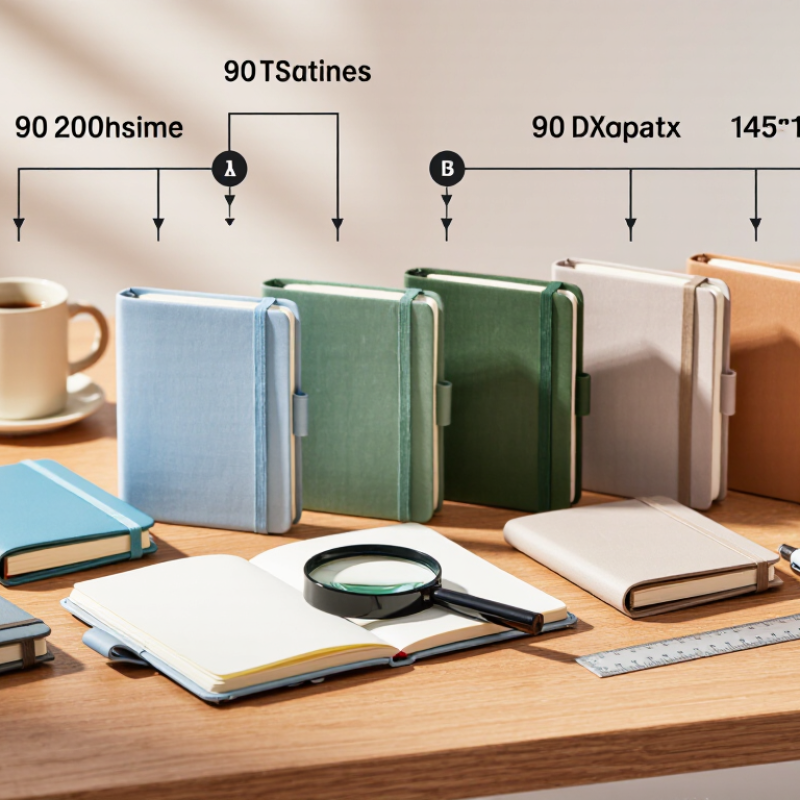
A high-quality pocket layflat notebook supplier offers more than attractive covers. The binding should open nearly flat without cracking or forcing the spine. This matters when users write on trains, in meetings, or outdoors. Ask for paper specifications, such as 80–120 gsm writing paper, stable ink performance, and clean trimming. Check whether page edges align evenly. Small defects become obvious in a compact notebook.
Tips: Request a physical sample before placing a large order. Test it with ballpoint, gel, and pencil. Turn each page slowly. Inspect the cover corners, elastic band, pocket, and stitching. Confirm the actual notebook size after binding, not only the cutting size. Ask for a documented quality-control process and pre-shipment inspection photos.
A dependable Chinese supplier should explain production steps clearly and answer technical questions without vague promises. Experience with export packaging also matters. Individual notebooks need protection from moisture, crushing, and dust during transport. Ask about carton strength and inner packing. Certifications may support responsible sourcing, but they should be verifiable and relevant. A polished sample can still hide weak mass production. That is easy to miss. Therefore, approve a signed sample, define acceptable defect limits, and record paper, color, dimensions, and binding requirements in writing. Good communication is not perfect, but it should be traceable and consistent.
China Best Pocket Layflat Notebooks Suppliers?
Pocket layflat notebooks require more than a flexible cover and attractive paper. Reliable suppliers control the binding process carefully. Sewn signatures usually open flatter than ordinary glued blocks. This matters when users write near the spine. For pocket sizes, thread tension must remain even. Too tight, and pages curl. Too loose, and the block shifts.
Manufacturers should match paper grain with the notebook’s opening direction. This small detail improves page movement and reduces cracking. Common writing papers range from 80 to 120 gsm. Fountain pen users may need better resistance to show-through. However, heavier paper increases thickness and shipping weight. A practical supplier tests pen marks, folding cycles, and page separation before production. Samples should also check rounded corners, cover flexibility, and pocket fit.
Quality control becomes more difficult at compact dimensions. A two-millimeter alignment error is visible on a small notebook. Inspectors should measure trim size, cover position, stitching, and elastic tension in defined batches. Moisture control also protects paper during storage and transport. Factory photos are useful, but physical samples provide stronger evidence. I have found that prototype results can still mislead when materials change during mass production. A written specification, approved sample, and documented inspection reduce that risk. Yet no process is perfect. Suppliers should welcome corrections instead of hiding weak samples.
| Manufacturing Dimension | Typical Pocket Notebook Specification | Key Manufacturing Features | Recommended Quality-Control Checks |
|---|---|---|---|
|
Compact Format
Portable |
Common closed sizes include approximately 90 × 140 mm, 100 × 150 mm, and A6 size at 105 × 148 mm. | Small formats are produced using accurately trimmed text blocks, covers, and rounded or square corners. Dimensional consistency is important for pocket storage and packaging. | Measure length, width, thickness, and corner alignment across a production sample. Check that the notebook fits the specified pocket or packaging sleeve. |
|
Layflat Binding
Core Feature |
Pages are designed to open close to 180 degrees without requiring the user to hold the notebook flat. | Common constructions include sewn signatures, flexible sewn binding, or specialized layflat adhesive binding. The selected method should match the page count, paper weight, and intended use. | Open the notebook at several positions, including the center and near the front and back. Check for excessive spring-back, loose pages, adhesive gaps, or broken thread. |
|
Interior Paper
Writing Performance |
Typical writing paper ranges from approximately 80 to 120 gsm, depending on the required opacity, thickness, and writing-tool compatibility. | Paper selection affects ink show-through, page stiffness, bulk, and overall writing comfort. Smooth uncoated paper is commonly used for everyday writing notebooks. | Verify paper weight, shade, caliper, surface smoothness, and opacity. Test with ballpoint pens, gel pens, pencils, and other tools specified for the product. |
|
Page Count
Capacity |
Many pocket notebooks contain approximately 48 to 192 pages, with the final count determined by paper thickness and binding capacity. | Higher page counts increase thickness and may require stronger sewing, wider spines, or a more flexible cover. Page signatures must be correctly collated before binding. | Count pages or sheets according to the agreed specification. Inspect signature sequence, pagination, center alignment, and the finished spine width. |
|
Cover Material
Protection |
Common options include coated paperboard, uncoated paperboard, kraft board, synthetic paper, polypropylene, or flexible coated stock. | Cover choice influences moisture resistance, rigidity, print quality, durability, and recyclability. Cover stock should be compatible with the selected folding and finishing processes. | Check cover thickness, surface defects, fold cracking, edge quality, scuff resistance, and whether the cover remains flat after binding. |
|
Cover Thickness
Structure |
Paperboard covers are commonly specified within approximately 250 to 400 gsm, while synthetic covers are usually specified by micrometre thickness. | Thicker covers provide greater protection but can reduce flexibility. The cover must be balanced with the layflat mechanism to avoid obstructing page opening. | Measure cover caliper or grammage. Check bending resistance, corner durability, spine flexibility, and the cover’s ability to close evenly. |
|
Page Layout
Customization |
Typical layouts include ruled, dot-grid, graph, blank, planner, and mixed-format interiors. | Printing requires consistent ruling or grid registration, stable line spacing, and suitable ink coverage. Layout files should define trim, margins, bleed, and safe areas. | Compare the printed layout with the approved proof. Inspect line spacing, print density, registration, margin consistency, and missing or duplicated pages. |
|
Printing Process
Appearance |
Offset printing is commonly used for larger runs, while digital printing is suitable for variable data or shorter production runs. | Printing parameters should be selected according to quantity, artwork complexity, paper surface, color requirements, and desired repeatability. | Review color consistency, text sharpness, registration, ink adhesion, smudging, and color variation between sheets or production batches. |
|
Corner Style
Safety & Durability |
Square corners and rounded corners are both common; rounded corners are often produced with a dedicated corner-cutting operation. | Rounded corners can reduce sharp edges and improve pocket handling. The cutting die or blade must remain sharp to prevent crushed or uneven edges. | Inspect corner radius consistency, edge smoothness, compression marks, and alignment between the cover and interior pages. |
|
Surface Finishing
Protection |
Available finishes include aqueous coating, matte or gloss lamination, varnish, foil stamping, and embossing. | Finishing improves appearance and can provide resistance to scuffing or light moisture. Paper flexibility and recycling requirements should be considered before selection. | Check adhesion, bubbles, wrinkles, scratches, gloss uniformity, foil coverage, embossing depth, and resistance to routine handling. |
|
Elastic Closure
Optional Feature |
An elastic band may be added to keep the notebook closed during transport; width and tension vary by design. | The elastic should be securely anchored without damaging the cover or distorting the page block. Tension must allow easy opening while preventing accidental opening. | Test repeated opening and closing, attachment strength, elasticity recovery, alignment, fraying, and contact marks on the cover. |
|
Ribbon Marker
Optional Feature |
A narrow polyester or textile ribbon may be attached as a page marker, provided that the binding structure supports it. | The ribbon is normally secured near the spine or inside the binding area. Its width, length, color, and cut quality should be controlled during assembly. | Check attachment strength, position, fraying, length consistency, and whether the ribbon interferes with the notebook closing flat. |
|
Edge Trimming
Precision |
Finished edges should be clean, even, and free from excessive paper dust, burrs, tears, or compressed sections. | Three-knife trimming or equivalent precision trimming is used to create uniform page-block edges after printing and gathering. | Inspect all three sides of the page block, compare trim dimensions with the approved sample, and check for pages cut too short or left untrimmed. |
|
Moisture and Storage
Logistics |
Paper products should be stored in a clean, dry environment and protected from direct moisture, heat, and pressure deformation. | Packaging should prevent corner damage, cover scuffing, dust contamination, and moisture exposure during storage and transportation. | Inspect cartons, inner packaging, desiccant requirements where applicable, compression protection, and product condition after transit simulation. |
|
Packaging Configuration
Shipping |
Common packaging includes individual sleeves or bands, inner cartons, master cartons, and palletized shipments. | Packaging quantities should be selected according to product weight, carton strength, handling requirements, and shipping efficiency. | Verify carton dimensions, gross weight, count per carton, barcode or label accuracy, drop resistance, and protection of notebook corners. |
|
Material Compliance
Documentation |
Depending on the destination market, buyers may request paper-source documentation, recycled-content information, or chemical and packaging declarations. | Compliance requirements vary by market and product construction. All materials, coatings, adhesives, inks, and packaging components should be traceable to their specifications. | Review supplier declarations, material specifications, test reports, and batch records. Confirm that documentation matches the actual production materials. |
Note: Specifications shown are common industry ranges and manufacturing considerations for pocket layflat notebooks. Final values should be confirmed through an approved product sample, technical drawing, and pre-production quality checklist.
Choosing a Chinese pocket layflat notebook supplier requires more than comparing unit prices. Check paper weight, binding strength, cover accuracy, and production consistency. A practical sample test should include opening the notebook 180 degrees, erasing pencil marks, and carrying it in a trouser pocket for one week. Measure spine cracking and page pullout.
Supplier documents also matter. The ISO Survey 2023 recorded over 1.2 million ISO 9001 certificates worldwide, but certification alone does not prove strong notebook production. Request the certificate scope, factory address, recent audit records, and production photos. Compare those details with the actual sample. FAOSTAT reported global paper and paperboard production at roughly 415 million tonnes in 2022, so paper availability is broad; however, recycled content, brightness, and moisture control still vary between mills.
Tips: Ask for a written specification sheet. Include page count, paper thickness, ruling, cover material, corner radius, packing method, and acceptable defect limits. Request a pilot order before full production. It costs more. It reduces unpleasant surprises. I would also inspect five cartons from different batches, because one excellent sample can hide uneven factory control. A supplier answering slowly is not automatically unreliable, but unclear answers deserve closer review. Payment terms, lead time, and replacement rules should be recorded before approval.
China Best Pocket Layflat Notebooks Suppliers?
Leading Supplier Types for Custom Pocket Layflat Notebooks
China offers several supplier types for custom pocket layflat notebooks. Each fits a different purchasing goal. Factory-direct manufacturers usually provide stronger control over paper, binding, printing, and packaging. They often support custom sizes, elastic bands, rounded corners, and inner pockets. This option suits buyers with stable orders and clear specifications.
Specialist notebook factories focus on bookbinding and paper products. Their technicians can recommend paper weights, thread stitching, glue types, and layflat structures. Ask for a physical prototype. A notebook should open smoothly on a desk, not merely look attractive in a digital file. Check whether the pocket remains flat after repeated use.
Trading companies can combine several production resources. They may help with communication, artwork checks, inspections, and smaller quantities. However, their production control may vary. Request factory photos, material details, sample records, and a written quality standard. Clear documents matter.
Sourcing agencies offer another route for buyers unfamiliar with Chinese manufacturing. They can compare quotations and arrange independent inspections. Their service fee must be transparent. A cheap quote may hide thinner paper, weaker adhesive, or inconsistent cutting. That mistake becomes expensive later. Small details matter. Buyers should compare prototypes, not promises, before approving mass production. Supplier selection is still a learning process. Even experienced purchasers sometimes overlook how humidity affects paper curling during storage.
China Best Pocket Layflat Notebooks Suppliers?
Ordering pocket layflat notebooks requires more than comparing unit prices. Send a written specification before requesting quotations. Include size, page count, paper weight, ruling, cover material, pocket depth, and binding method. A physical sample reveals details that photos hide. Check whether pages open flat without cracking near the spine. Check the pocket corners, too. They often fail first.
Quality control should happen at several stages. Review the pre-production sample against an approved reference. During production, inspect paper shade, trimming accuracy, printing alignment, stitching, and adhesive strength. A practical tolerance sheet prevents vague arguments. For example, set acceptable size variation at two millimeters and define the maximum number of damaged pages per carton. I have seen attractive samples followed by uneven mass production. That mistake is expensive, and sometimes avoidable.
Export planning needs equal attention. Confirm carton dimensions, gross weight, packing protection, shipping marks, commercial invoices, packing lists, and agreed Incoterms. Ask the supplier to verify the correct product classification with a qualified customs professional. Do not rely on casual estimates. Request carton photos before shipment, then compare them with the packing plan. A small notebook may still suffer crushed corners during sea transport. Better packaging can raise costs, but weak packaging can erase the savings. Even experienced buyers should leave room for corrections.
Standard finished-size references help buyers define the product before requesting quotations. A6 and A5 are ISO 216 formats, while B6 is a Japanese Industrial Standard format. Confirm the finished notebook size, page dimensions, binding performance, paper quality, packaging, and export documentation with the supplier before placing an order.
Dimensions shown in millimetres. Reference: ISO 216 paper sizes and JIS B-series paper-size conventions.
It should open nearly flat without cracking or forcing the spine. Sewn binding helps. Pages should align evenly, and the cover must remain flexible.
Ask for 80–120 gsm writing paper and clear paper thickness details. Test ballpoint, gel, and pencil marks. Fountain pen users may need stronger resistance to show-through.
Uneven thread tension can curl pages or shift the paper block. The paper grain should match the opening direction. Small construction errors become obvious quickly.
Open it 180 degrees, turn pages slowly, and check for spine cracking. Carry it in a trouser pocket for one week. Try erasing pencil marks. The test is not perfect.
Record page count, paper weight, ruling, cover material, and notebook dimensions. Also define corner radius, pocket fit, elastic tension, and packing method. Include acceptable defect limits.
No. Photos can show useful details, but physical samples provide stronger evidence. Inspect samples from different production batches. One excellent sample may hide uneven control.
Request a pilot order before full production. Inspect several cartons for moisture, crushing, dust, and weak inner packing. Confirm carton strength and pre-shipment inspection photos.
A dependable supplier explains production steps and answers technical questions clearly. Slow replies are not automatically a problem. Vague answers deserve closer review. Record payment terms, lead time, and replacement rules.
Choosing the right China supplier for Pocket Layflat Notebooks requires more than comparing prices. A high-quality supplier should demonstrate reliable production capabilities, consistent paper and cover materials, accurate layflat binding, strong stitching or adhesive techniques, and careful finishing. They should also support customization in size, page layout, cover design, printing, packaging, and other specifications while maintaining stable quality across large and small orders.
Before placing an order, buyers should evaluate supplier experience, sample quality, production capacity, communication, and quality-control procedures. Different supplier types may suit different needs, including specialized notebook manufacturers, printing factories, and customized stationery producers. Clear technical requirements, approved samples, inspection checkpoints, and realistic production schedules can help prevent problems. Buyers should also confirm packaging standards, shipping documentation, lead times, and export arrangements to ensure Pocket Layflat Notebooks arrive safely and meet the intended market requirements.