
Choosing among China’s top Custom Printed Notebooks suppliers requires more than comparing catalogue photos and unit prices. A notebook may look attractive online, yet its paper can bleed under fountain-pen ink. Its cover may also feel thinner than expected. Reliable sourcing begins with practical evidence, including material samples, factory communication, production records, and verified customer feedback.
Experienced buyers usually examine paper weight, ruling accuracy, binding strength, cover coating, and color consistency. They ask whether the supplier can match Pantone references across large production runs. They also check sampling procedures, packaging details, inspection standards, and production timelines. Certifications such as FSC or ISO may support credibility, but they should be verified rather than accepted as marketing claims. A professional supplier should explain tolerances clearly and provide realistic answers about defects, reprints, and shipping risks.
No supplier is perfect.
This article explores leading notebook manufacturers and trading companies in China through a practical purchasing lens. It considers customization depth, minimum order quantities, sample quality, communication, and after-sales responsibility. It also recognizes an uncomfortable truth: the cheapest quotation may hide weaker paper, rushed inspection, or limited support after payment. Supplier rankings can change as factories upgrade equipment, lose key staff, or enter new markets. Therefore, readers should treat this guide as a starting point, not a final verdict. Request current samples, confirm specifications in writing, and test a small order before committing to a large production run. That cautious process can protect brand reputation, customer experience, and long-term sourcing value.
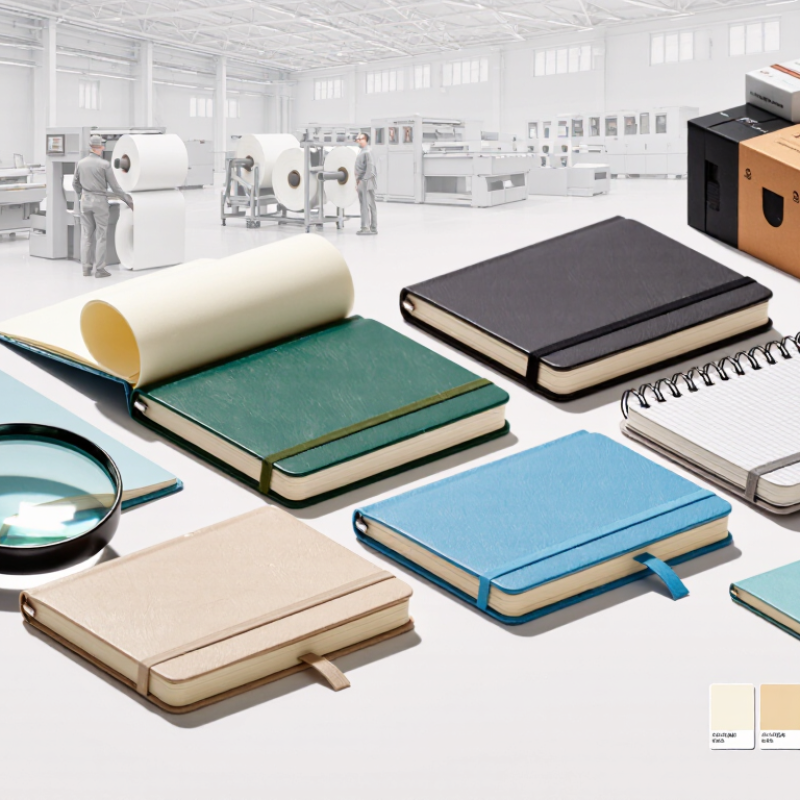
A top custom printed notebook supplier in China combines production skill, clear communication, and dependable quality control. Experience shows in small details, such as even foil stamping, clean rounded corners, and pages that turn without catching. The supplier should understand paper weight, ruling styles, cover materials, binding methods, and color management. A professional team can recommend 80 GSM paper for everyday writing or thicker stock for markers and sketches. It should also provide a physical sample before mass production. Digital previews are useful, but they cannot reveal paper texture or binding tension.
Reliability is equally important. Strong suppliers explain minimum order quantities, tooling fees, lead times, packaging, and inspection standards before accepting payment. They should answer technical questions with specific measurements, not vague promises. Factory photos, production records, and independent quality checks can strengthen trust. Still, no supplier gets every detail right. A minor color shift may appear between the approved sample and the final batch. Honest suppliers report such issues and propose practical solutions.
Tips: Request a pre-production sample, confirm the paper GSM, and inspect ten finished notebooks from different cartons. Ask how defects are recorded. Check whether replacement terms are written clearly. A low price can hide weak paper, rushed binding, or inconsistent printing. Sometimes, paying slightly more prevents expensive rework. Examine the supplier’s response speed, too. It often predicts the support you will receive after production.
Chinese suppliers specializing in custom printed notebooks usually fall into three practical groups. Factory-direct stationery manufacturers handle medium and large orders. They often offer offset printing, foil stamping, elastic bands, pockets, and several binding options. Their strength is stable production and lower unit costs.
Digital print workshops suit smaller batches, test launches, and frequently changing artwork. They can produce short runs with faster proofing. Some suppliers focus on premium journals, using textured covers, rounded corners, sewn binding, and heavier inner paper. Others specialize in recycled materials or certified paper systems. Location helps, but it does not prove quality.
From my experience, a dependable supplier should explain paper weight, color tolerance, binding strength, and packaging details clearly. Ask for a physical pre-production sample, not only a digital mockup. Check whether the printed cover bends cleanly after folding. Request recent quality records and relevant environmental or factory certifications when needed. Confirm the minimum order quantity, production schedule, inspection process, and replacement policy in writing.
Small details expose weak preparation. A dark blue cover may print slightly purple. A thin elastic band may loosen after repeated use. I once underestimated the effect of humidity on paper curling. That mistake changed how I review samples. No supplier performs perfectly every time, so transparent communication and documented corrections matter more than impressive promises.
Chinese custom notebook suppliers usually begin with a detailed design brief. They ask about size, paper weight, cover material, binding, colors, and printing methods. Experienced teams convert these details into production-ready artwork. They also check margins, spine width, and image resolution before printing.
Most suppliers provide digital mockups and physical samples. A paper sample can reveal ink absorption, texture, and writing comfort better than a screen. Buyers may choose recycled paper, coated covers, elastic bands, pockets, or rounded corners. Custom logos and internal layouts are usually reviewed through proofing. Clear approval records reduce misunderstandings.
Tips: Request a pre-production sample. Confirm color codes and paper specifications. Ask how rejected units are handled. Keep the final artwork and approval notes together.
Customization takes communication. Small factories may offer flexible quantities, while larger facilities often provide stronger process control. However, capacity alone does not guarantee accuracy. A first sample may still feel slightly wrong. The cover can look darker, or the binding may open too tightly. This is where careful feedback matters. Reliable suppliers explain limitations instead of promising everything. They should also share realistic timelines, inspection steps, and packaging details. In practice, the best result comes from repeated checking, not attractive catalog images.
When comparing top custom printed notebook suppliers in China, start with their order minimums. Many factories accept 100 to 500 pieces for standard notebooks. Hardbound or highly customized projects may require 1,000 pieces. Smaller quantities often carry higher unit costs. Ask whether the minimum applies to one design, size, or combined artwork.
Prices usually range from $0.80 to $4.50 per notebook. Paper weight, page count, cover material, binding, and printing colors affect the quote. Recycled paper and rigid packaging can increase costs. A low price is not always better. Request a detailed quotation, including sampling, packaging, inspection, and shipping. Sample fees often range from $30 to $100, with delivery taking five to ten business days.
Production commonly needs 15 to 30 business days after sample approval. Complex foil stamping, elastic bands, or several notebook designs may add another one or two weeks. Reliable suppliers should provide material samples, factory photos, and a written production schedule. I have seen timelines fail when artwork approval stayed informal. That mistake is easy to make. Confirm the paper grain, color references, carton marks, and final quantity in writing. A pre-production sample can reveal uneven printing or weak binding before the full order begins.
Indicative ranges for common OEM notebook orders in China. Higher customization usually increases the minimum order quantity, unit cost, and production time. Prices exclude shipping, taxes, packaging upgrades, and artwork preparation.
Who Are the Top Custom Printed Notebook Suppliers in China?
The strongest suppliers are not judged by catalogs alone. Buyers should request a physical sample before approving large quantities. Check paper weight, surface smoothness, ink density, and page alignment. A dark cover should not show uneven color near the spine. Test the binding by opening the notebook repeatedly. It should stay flat without loose pages. Ask whether production samples come from the same materials and machines used for bulk orders. A perfect sample can still mislead.
Compliance needs written evidence. Request material specifications, factory audit records, and relevant environmental or safety documents. Confirm that inks, adhesives, packaging, and paper meet the destination market’s requirements. Supplier communication also matters. Clear inspection standards prevent arguments later. Shipping support should include carton measurements, packing photos, estimated production time, and realistic delivery options. Ask who manages export documents and what happens if cartons arrive damaged. Some suppliers promise fast delivery too easily. Leave a buffer for holidays, inspections, and port delays.
Tips: Compare at least three quotations with identical specifications. Measure the sample yourself. Use an independent inspection before shipment when the order is valuable. Keep approved colors, paper details, and packaging drawings in writing. If a supplier avoids specific answers, pause the order. Small omissions often become expensive corrections.
A reliable supplier combines clear communication, stable production, and documented quality checks. Details matter. Pages should turn smoothly, corners should look even, and foil stamping should remain clean.
A physical sample reveals paper texture, ink absorption, color depth, and binding tension. Screens can mislead. Approve the sample before mass production.
Around 80 GSM paper suits everyday writing. Heavier paper works better for markers, sketches, and bold ink. Confirm the GSM in writing.
Common options include cover materials, paper layouts, rounded corners, pockets, elastic bands, and different binding methods. Internal pages can also receive custom printing.
Inspect at least ten finished notebooks from different cartons. Check page alignment, cover folding, binding strength, printing color, and corner finishing. Small defects can reveal larger process problems.
Confirm the minimum order quantity, tooling fees, lead time, packaging, inspection method, and replacement terms. Vague promises are not enough.
Not always. Factory-direct suppliers often suit medium or large orders, while digital workshops may suit small batches and changing artwork.
A minor color shift can happen, especially with dark covers. Honest suppliers should report it and suggest practical corrections. Perfect consistency is difficult.
China’s leading custom notebook suppliers are defined by their ability to combine reliable manufacturing, flexible customization, consistent quality, and responsive communication. They typically offer a broad selection of notebook formats, paper types, covers, binding methods, and finishing options for different business and promotional needs. Buyers should look for suppliers with clear design support, accurate proofing processes, modern production capabilities, and experience handling both standard and specialized orders. Custom Printed Notebooks can be developed from customer artwork or created with assistance from an in-house design team, allowing adjustments to logos, colors, page layouts, packaging, and other details.
Before placing an order, buyers should compare minimum order quantities, unit prices, sampling fees, and production schedules. They should also confirm how revisions, inspections, packaging, and delivery are managed. A dependable supplier should explain material specifications, quality-control procedures, compliance documentation, and shipping arrangements in advance. Evaluating samples, requesting transparent quotations, and maintaining written production requirements can help buyers reduce misunderstandings and select a capable long-term manufacturing partner.