Industrial White Paper: CE Certified Bullet Journal Manufacturing
Technical parameters, material science compliance, structural binding engineering, and global export audit requirements for corporate stationery sourcing managers.
In the modern international retail and corporate gifting markets, sourcing high-grade notebooks extends beyond superficial aesthetics. Professional procurement managers, educational suppliers, and boutique stationery brands demand strict regulatory compliance, technical paper performance, structural longevity, and chemical safety. As leading CE certified bullet journal suppliers and exporters, our manufacturing facilities adhere to rigorous international quality control standards, ensuring every batch meets European, American, and global trade mandates.
Key Takeaway for B2B Sourcing Directors: CE Certification for stationery products verifies compliance with strict chemical safety protocols (EN 71-3 heavy metals migration), binding mechanical safety, and REACH environmental requirements. Partnering with certified suppliers minimizes customs hold-ups, eliminates brand liability, and guarantees long-term consumer trust.
1. Regulatory Compliance Framework (CE, EN 71-3, and REACH Protocols)
Contrary to common perception, CE certification is not limited solely to electronics or heavy industrial machinery. Stationery products—particularly bullet journals, sketchbooks, and school note books destined for the European Economic Area (EEA)—must comply with safety standards under the Toy Safety Directive (2009/48/EC) whenever products are marketed to students or general consumer demographics. Our manufacturing infrastructure guarantees full compliance across three critical regulatory pillars:
- EN 71-3 (Migration of Certain Elements): Ensures that inks, cover adhesives, PVC/PP coatings, and metallic foils are strictly tested for 19 toxic heavy metals (including Lead, Cadmium, Arsenic, and Mercury). Our water-based printing inks pass independent SGS and TÜV Rheinland laboratory tests.
- EU REACH Regulation (EC 1907/2006): Regulates Substances of Very High Concern (SVHC). Our synthetic leather (PU), fabric textiles, and plastic covers are free from harmful phthalates, organotins, and azo dyes.
- FSC® Chain-of-Custody Certification (FSC-C123456): Guarantees that 100% of our inner paper pulp is harvested from responsibly managed forests, supporting eco-conscious brand positioning.
2. Material Science & Technical Paper Performance Metrics
The primary benchmark of a superior bullet journal lies in its paper substrate. Ink ghosting, feathering, and bleed-through ruin the user experience for bullet journalists who use fountain pens, watercolor markers, and gel pens. We engineer our notebooks using high-density, acid-free woodfree paper ranging from 100 GSM to 160 GSM.
| Paper Metric |
Standard Notebook (Low Grade) |
Our CE Certified Bullet Journal Spec |
B2B Sourcing Advantage |
| Grammage (GSM) |
60 GSM – 80 GSM |
120 GSM – 160 GSM |
Prevents ink feathering & back-page ghosting. |
| Pulp Composition |
Recycled Sludge / Unbleached |
100% Pure Virgin Woodfree / FSC Pulp |
Ensures high tensile strength & 100+ year archiving life. |
| Opacity Rating |
< 80% (High bleed) |
> 96% Opacity |
Supports heavy ink markers, watercolor wash, and calligraphy. |
| Whiteness / Tone |
High-glare Bleached White (CIE 165) |
Eye-Comfort Soft Cream (CIE 140 / 85% ISO) |
Reduces eye fatigue during extended planning or writing. |
| Grid Precision |
Inconsistent (3mm to 7mm drift) |
Laser-Calibrated 5mm Light Grey Dot Grid |
Provides subtle structural guidance without overpowering art. |
3. Binding Engineering: The Physics of 180° Flat-Lay Durability
Standard perfect-bound books crack along the glue spine after repeated use, forcing users to use physical weights to keep the journal open. Our manufacturing facility utilizes an advanced Smyth-Sewn (Thread-Bound) Layflat Construction system combined with flexible cold-melt polyurethane (PUR) adhesive.
This hybrid binding mechanism enables every spread to lie completely flat at 180 degrees without damaging the spine integrity. It guarantees zero gutter loss, allowing continuous horizontal drawings, grid spreads, and panoramic note-taking across adjacent pages. Each signatures bundle is double-stitched with high-tensile cotton-polyester thread, engineered to withstand upwards of 15,000 opening/closing cycles.
Strategic Sourcing: Future Trends in Bullet Journal Manufacturing
Key insights into consumer behavior, material innovation, and technology integration shaping the premium stationery export market.
1. Eco-Material Innovations (Plant-Based & Zero-Plastic Stationary)
As global environmental regulations tighten, the stationery industry is transitioning away from conventional PVC covers toward sustainable alternatives. Forward-thinking buyers are increasingly specifying Water-based Bio-PU Leathers derived from agricultural by-products (such as apple skin, pineapple fiber, and cork), along with Stone Paper (Calcium Carbonate) which requires zero water or trees to produce.
Furthermore, post-consumer recycled (PCR) paper options treated with organic soy-based inks are becoming mandatory requirements for major European retail procurement contracts. Our engineering team continues to test sustainable materials to ensure eco-friendly options retain full CE non-toxicity compliance.
2. Analog-Digital Hybrid Workflow Integration
The modern stationery market is seeing a surge in hybrid productivity. Professionals and students favor paper bullet journals that integrate seamlessly with digital archiving platforms. Trends include laser-printed QR Code Index Margins and invisible optical dot patterns compatible with smart pens (such as Neo Smartpen or Livescribe).
By scanning paper journal spreads directly into cloud databases like Notion, Evernote, or Google Drive, users enjoy the tactile benefits of paper alongside digital searchability. We offer custom printing parameters tailored for optical recognition scanning accuracy.
3. Ergonomic Accessories & Modular Corporate Branding
Corporate procurement is shifting away from standardized promo notebooks toward multi-functional lifestyle desk tools. Current trending hardware additions include:
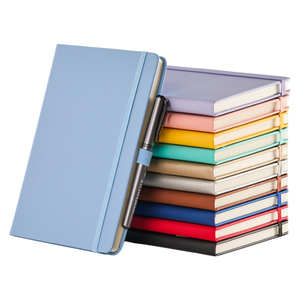
- Integrated magnetic pen loops and concealed back-cover expander pockets.
- Dual ribbon bookmarks with custom metallic charms or heat-transferred logos.
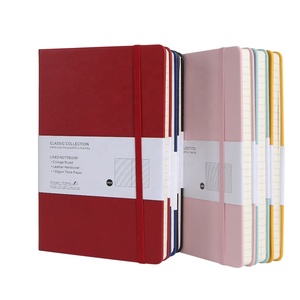
- Elastic band closures with customized laser-engraved metal sliders.
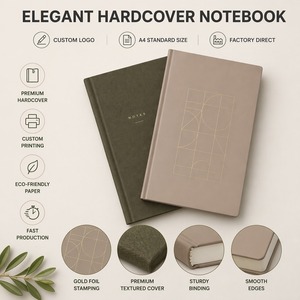
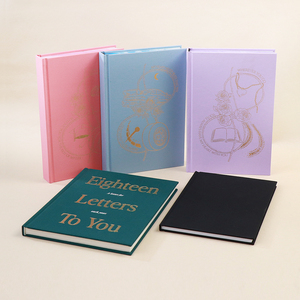
- Edge printing, including full-color artwork edge sprayed finishes and metallic gold foil gilded edges.
Frequently Asked Questions (B2B Procurement)
Clear answers to technical, logistics, and compliance queries routinely submitted by global trade buyers.
What specific documentation verifies that your bullet journals are CE Certified?
We provide comprehensive technical dossiers containing EN 71-3 material laboratory test reports, REACH SVHC compliance declaration certificates, FSC chain-of-custody documentation, and ISO 9001 quality audit reports. All test results are issued by internationally recognized third-party laboratories such as SGS or Intertek.
Can we request pre-production physical samples before placing mass OEM orders?
Yes. We provide digital 3D soft proofs within 24 hours of receiving vector artwork files. Furthermore, we can manufacture physical custom pre-production samples (featuring your exact cover foil stamping, paper weight, and custom packaging) within 3 to 5 business days for final quality evaluation.
Why is 160 GSM paper preferred for bullet journaling over standard 80 GSM paper?
Bullet journaling involves heavy ink usage, including brush pens, fountain pen ink, metallic markers, and light watercolor washes. 160 GSM ultra-heavyweight paper offers complete opacity, guaranteeing zero ghosting or bleed-through, enabling full usage of both sides of every sheet.
What are your minimum order quantities (MOQ) for custom logo branding?
Our automated, flexible manufacturing lines support orders ranging from low-volume custom runs (MOQ 100 units for standard covers with custom foil stamping) up to high-volume retail shipments of 50,000+ units with fully customized cover construction, custom endpages, and specialized retail packaging.
How does your Smyth-Sewn layflat binding perform under heavy daily commercial use?
Our Smyth-Sewn binding utilizes individually stitched thread signatures combined with flexible PUR glue application. This allows pages to lay 180 degrees completely flat on a desk without requiring manual pressure. It eliminates spine cracking and page detachment even after long-term daily use.
What are the standard lead times for ocean freight and air freight export delivery?
Standard factory production takes 5 to 10 days post-sample approval. Air freight delivery typically arrives within 5 to 7 business days worldwide, while ocean freight shipments take between 20 to 35 days depending on the destination sea port (FOB Shanghai/Ningbo/Shenzhen or DDP direct to your distribution center).