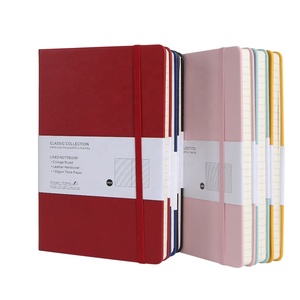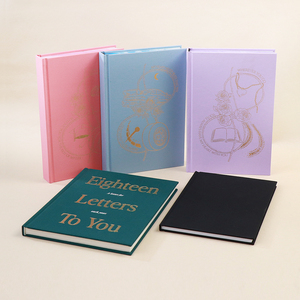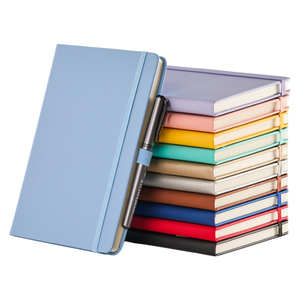
Explore high-capacity paper engineering, specialized cover textiles, custom layflat bindings, and precision foils engineered for international brands and wholesalers.
Understanding paper density, structural engineering, binding integrity, and supply chain logistics for B2B importers and retail brands.
The global stationery and organizational tool market has undergone a major paradigm shift. No longer viewed simply as utilitarian note-taking tools, daily planners, executive agendas, and artist-designed journals have transformed into high-margin lifestyle accessories, wellness trackers, and corporate branding powerhouses. At the heart of this global ecosystem is China's manufacturing sector—specifically concentrated across Guangdong, Zhejiang, and Jiangsu provinces—which accounts for over 70% of high-grade paper product exports worldwide.
For international buyers, brand owners, and procurement directors, navigating China's manufacturing landscape requires deep clarity regarding technical specifications, material selection, binding durability, and eco-compliance standards. This document delivers actionable procurement intelligence to optimize your custom planner manufacturing contracts.
Leading Chinese exporters maintain strict adherence to international environmental standards, including FSC (Forest Stewardship Council) certified wood-free paper, REACH-compliant non-toxic inks, and BSCI social audit clearances essential for EU/North American retail placement.
From 80 GSM ultra-light weight wood-free stock to 160 GSM heavy-duty fountain-pen proof bamboo pulp paper, advanced Chinese mills deploy automatic opacity calibration, smooth surface calendering, and zero-bleed coating technologies.
Whether servicing indie kickstarter projects requiring low minimum order quantities (MOQs starting at 500 units) or scaling up for multinational retail conglomerates ordering millions of units, Chinese facilities offer automated high-speed casing-in lines.
Evaluate core manufacturing parameters when requesting factory quotations and engineering specs.
| Binding Architecture | Inner Page Weight / Options | Cover Material Options | Special Finishing Techniques | Ideal Market Application |
|---|---|---|---|---|
| Smyth Sewn Layflat | 100 GSM - 120 GSM Wood-free / Uncoated Cream | PU Leather / Italian Thermal PU / Hardcover Paperboard | Debossing, Foil Stamping, Ribbon Bookmarks, Gilded Edges | Executive Agendas, Luxury Bullet Journals, Wellness Planners |
| PUR Soft Cover Glue | 80 GSM - 100 GSM FSC Recycled Offset Paper | 300 GSM Art Cardstock / Kraft Paper Cover | Matte/Gloss Lamination, Soft-touch Coating, Edge Printing | Mass Market Student Planners, Travel Journals, Lightweight Carry |
| Twin-Wire O Spiral | 120 GSM - 160 GSM Heavyweight Bleed-Proof Paper | PP / PVC Waterproof Sheet, Rigid Fabric Linen, Metal Corners | Laser Die-cut Tabs, Inner Pocket Envelopes, Elastic Band Closure | Academic Planners, Desktop Daily Schedules, Artist Sketch Planners |
| Flexi-Bound Fabric | 100 GSM Bamboo Pulp / Ivory Acid-Free Paper | Woven Linen Cloth / Canvas / Embroidered Fabric Cover | Screen-printed Artwork, Foil Stamped Accents, Custom Endpapers | Boutique Gift Sets, Artist Collection Merchandise, Keepsake Diaries |
As consumer preferences shift toward mindful organization and eco-conscious consumption, OEM/ODM daily planner factories in China are introducing breakthrough production practices to maintain competitive advantage:
Sustainability is no longer optional. Global buyers actively request stone paper (calcium carbonate blend), sugarcane bagasse paper, and 100% post-consumer recycled fiber inner block stock. FSC-certified greyboards and biodegradable soy-based inks have become baseline standards in top-tier Ningbo and Shenzhen facilities.
Bridging the analog and digital divide, modern custom planners now embed custom QR code indices, smart phone scanning guidelines, and NFC tags embedded inside the leather spine. This allows users to digitize handwritten daily goals straight into digital calendar apps seamlessly.
To mitigate inventory risk and avoid date-obsolescence write-offs, international buyers are transitioning toward undated 52-week & 365-day layouts. Factories facilitate this shift with custom die-cut month tabs, reusable sticker packs, and modular refill inserts bound by disc or binder rings.
Integrated manufacturing ecosystems unlock unprecedented cost optimization, speed-to-market, and custom craft options.
Equipped with German Heidelberg 5-color offset presses, Swiss Muller Martini automatic sewing lines, and Kolbus hard casing-in machinery, tier-1 Chinese suppliers process order runs of 100,000+ units within 15 to 20 business days while holding tight color tolerances (ΔE < 1.5).
From intricate 3D foil stamping dies, edge gilding (gold, silver, matte sprayed, rainbow laser), and custom ribbon printing to magnetic clasp hardware molding, handling all post-press embellishments in-house reduces unit cost and eliminates lead-time delays.
Premier manufacturers implement structured AQL (Acceptable Quality Limit) inspections at raw paper arrival, post-printing drying, binding tensile testing, and final shrink-wrap packaging, ensuring zero defective books reach destination ports.
Clear answers to critical questions regarding custom OEM orders, sampling, MOQs, and shipping logistics.
Standard OEM custom daily planners (custom cover art, specific inner page layout, custom size) generally require an MOQ of 500 to 1,000 units per design. However, for fully stock-standard sizes (e.g., standard A5 hardcovers with simple logo hot stamping), many supplier factories can accommodate trial orders starting as low as 100 to 300 units.
Specify paper density of at least 100 GSM to 120 GSM wood-free offset paper or ivory paper. Ask the factory for high-sizing paper treated with surface calendering. You can request a physical pre-production sample to execute ink bleed-through tests (using fountain pens, gel ink, and permanent markers) prior to authorizing mass production.
Smyth Sewn (Thread Sewn) binding folds pages into signatures (booklets of 16 or 32 pages) which are stitched together with thread before being glued to the spine. This allows the planner to open completely flat (180 degrees) on a desk without breaking the spine or snapping pages out. Perfect binding relies solely on adhesive at the spine edges, which prevents the book from staying flat and risks cracking under heavy daily usage.
Sample lead time usually takes 5 to 7 working days for digital proofs and physical prototypes (including custom foil stamping dies and sample printing). Mass production generally takes 15 to 25 calendar days depending on structural complexity (e.g., gilded edges, custom hardware clasps, multi-ribbon insertion) and total order volume.
Factories require print-ready vector artwork in PDF, AI, or PSD formats. Files must be set to CMYK color mode (not RGB), rendered at 300 DPI resolution minimum, and include a 3mm (0.125 inch) bleed margin on all outer edges. Cover foil stamping, embossing, or spot UV paths must be supplied on separate vector layers in solid 100% K black.
Yes. Experienced exporters provide full DDP (Delivered Duty Paid) logistics services. They handle export customs clearance, ocean/air freight booking, FBA box labeling, palletization according to Amazon or big-box retailer standards, and direct delivery to warehouses across North America, Europe, Australia, and Asia.
Ready to launch your custom daily planner line, corporate agenda, or artist-designed journal collection? Get instant factory-direct pricing, material swatch kits, and technical artwork reviews today.