
Engineering Excellence in OEM/ODM Spiral Planner Manufacturing
The global stationery and office productivity market has undergone a structural paradigm shift. No longer viewed as mere commodity paper products, corporate planners, academic spiral notebooks, and artist-designed journals serve as key brand physical touchpoints. For sourcing directors, supply chain executives, and brand procurement managers, navigating the landscape of OEM/ODM Spiral Planner Factories & Exporters requires a deep technical understanding of substrate dynamics, structural binding engineering, and scalable manufacturing workflows.
Original Equipment Manufacturing (OEM) and Original Design Manufacturing (ODM) in the paper converting industry demand rigorous control over material specifications. From managing paper GSM tolerances to ensuring layflat mechanical integrity under high daily use, partner factories must operate under tight international standards. This comprehensive technical guide outlines the procurement benchmarks, raw material selections, quality assurance protocols, and future trends defining modern planner export manufacturing.
Precision Binding Science
Dual-loop Wire-O and pitch-calibrated spiral coiling engineered for zero-snag page turning and 360-degree flat writing surfaces.
Global ESG Compliance
Full FSC Chain-of-Custody certification, ISO 9001 quality frameworks, and REACH-compliant non-toxic soy-based inks.
200% Guarantee Architecture
Factory-direct quality pledge guaranteeing total reprint or full financial reimbursement on any structural defect or specification drift.
Substrate Selection & Paper Science for Enterprise Planners
The core user experience of any spiral planner is dictated by its paper block. Sourcing teams must evaluate paper substrates not merely by basis weight (GSM), but through a matrix of mechanical and chemical metrics including caliper thickness, opacity percentage, ink absorption rates, and tensile strength across the grain direction.
1. Woodfree Offset Paper (70 GSM to 120 GSM)
Uncoated woodfree paper remains the industry gold standard for daily productivity planners and corporate meeting journals. Manufactured by chemically removing lignin from wood pulp, high-grade uncoated papers resist yellowing and degradation over long archiving periods. For standard spiral planners, an 80 GSM to 100 GSM specification provides an optimal balance between book bulk weight and opacity.
2. Premium Acid-Free Ivory & Cream Sheets
High-end corporate gift planners and artist journals typically demand warm-toned cream or ivory substrates (range 100 GSM to 120 GSM). These papers undergo neutral sizing processes (pH 7.5 to 9.0), eliminating acid-induced paper rot. Crucially, acid-free sheets offer high surface smoothness (Bendtsen roughness under 150 ml/min), preventing feathering and bleed-through when end-users employ gel pens, fountain pens, or heavy alcohol markers.
3. FSC-Certified Recycled & Alternative Fiber Stocks
With corporate ESG directives driving supply chain specifications, OEM exporters must offer robust eco-substrates. FSC Mix and FSC Recycled post-consumer waste (PCW) stocks are now available in high-whiteness grades that mimic virgin fibers. Advanced facilities also process agricultural byproduct stocks—such as bamboo pulp, bagasse (sugarcane fiber), and calcium carbonate stone paper—providing unique tactile selling propositions for environmentally conscious brands.
Substrate Technical Comparison Matrix
| Paper Type | Grammage (GSM) | Caliper (Microns) | Opacity (%) | Fountain Pen Safe | Primary Target Application |
|---|---|---|---|---|---|
| Standard Woodfree Offset | 70 - 80 GSM | 92 - 105 µm | 88% - 91% | Moderate | Mass Academic & Value Planners |
| Premium Uncoated White | 100 - 120 GSM | 130 - 155 µm | 94% - 97% | High | Corporate Executive Meeting Planners |
| Acid-Free Smooth Ivory | 100 - 140 GSM | 135 - 180 µm | 96% - 99% | Superior | Luxury Bullet Journals & Artist Notebooks |
| FSC 100% PCW Recycled | 80 - 100 GSM | 105 - 130 µm | 90% - 93% | Moderate | Eco-Certified Corporate Gift Sets |
| Tree-Free Stone Paper | 120 - 160 GSM | 100 - 140 µm | 100% (Waterproof) | Waterproof / Gel Ink | Heavy-Duty All-Weather Outdoor Planners |
Spiral Binding Mechanics & Hardware Engineering
The binding structure determines a planner's structural lifetime and functional ergonomics. Unlike standard thread-sewn or perfect-bound books, spiral and wire-bound planners allow complete 360-degree cover rotation and lie flat effortless on any desk surface. An experienced OEM factory offers specialized binding pathways:
Twin-Ring Wire-O Binding (Double-Loop Wire)
Twin-ring wire binding is the preferred hardware choice for professional and luxury corporate planners. Utilising pre-formed wire pairs passing through square or round punched holes, Wire-O offers a polished aesthetic and zero page-shifting. Factories standardise on two main pitch ratios:
- 3:1 Pitch (3 holes per inch): Ideal for planners up to 9/16 inches (14mm) in block thickness (roughly 120 leaves of 80 GSM paper). Offers a tighter, refined look.
- 2:1 Pitch (2 holes per inch): Used for heavy-duty, high-page-count planners ranging from 5/8 inch to 1.25 inches thick. Provides superior structural rigidity under heavy daily usage.
Continuous Single-Coil Spiral Binding (Metal & Recycled Plastic)
Continuous spiral coiling involves feeding a single plastic or nylon-coated metal wire helix through a series of circular punches. Plastic spiral coils (PVC, PET, or PLA) offer shape memory properties—if crushed, the coil bounces back without permanent deformation. This makes single-coil spiral planners particularly suited for student workbooks, travel logs, and field planners exposed to rough transit in backpacks.
Cover Materials, Structural Boards & Surface Finishing
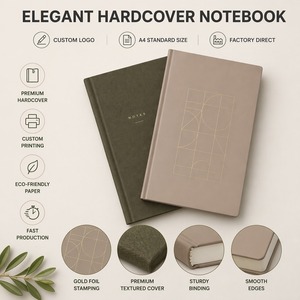
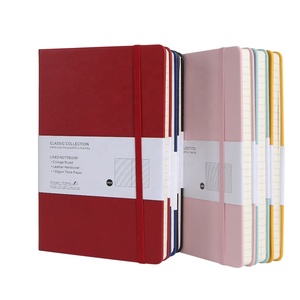
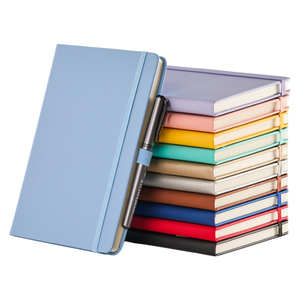
The cover of a spiral planner provides crucial structural protection while serving as the primary visual display for brand identity. Professional OEM/ODM manufacturers maintain dedicated hardbound and softcover conversion lines capable of processing a diverse range of materials:
1. Thermo PU & Vegan Leatherette Covers
Thermo-reactive Polyurethane (PU) allows for deep heat-debossing where the burnt-in logo changes color dynamically, revealing a darker contrast underneath. Available in pebble grain, smooth nappa, or textured cross-hatch finishes, thermo PU delivers a luxury executive feel while maintaining water resistance and durability.
2. Bookbinding Cloth, Linen & Canvas
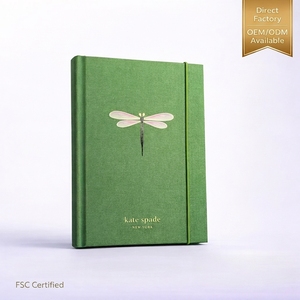
Woven textiles—such as natural cotton linen, spun rayon, and heavy canvas—bring a tactile warmth unmatched by synthetic covers. OEM lines apply special paper-backing to raw fabrics to prevent glue bleed during hardbound casing-in operations. Foil stamping on cloth requires specialized high-temperature metallic foils calibrated for textured weaves.
3. Rigid Greyboard Construction (Hardcover Planners)
For hardcover spiral planners, structural stability hinges on the density of the inner greyboard core. Export-grade factories utilize high-density recycled chipboard ranging from 1.8mm to 3.0mm in caliper thickness. Board edges must be precision die-cut to prevent warping under climatic moisture changes during sea freight transportation.
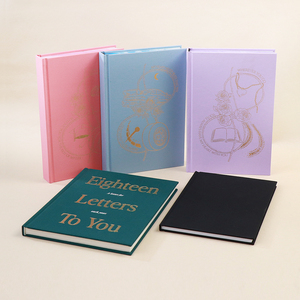
Enhance corporate branding through advanced surface treatments: Metallic Hot Foil Stamping (Gold, Rose Gold, Silver, Holographic), Blind Debossing/Embossing, Spot UV Varnish, Custom Die-Cut Windows, Gilded Page Edges (Metallic Foil or Sprayed Pantone Matching), and Screen-Printed Metallic Accents.
Enterprise Supply Chain Advantages & Factory Capabilities
Partnering with a specialized export factory provides B2B buyers with operational efficiencies that extend beyond mere unit price discounts. A mature OEM/ODM supply chain offers clear risk-mitigation infrastructure:
Agile Micro-Batch Scaling & Low MOQs
Traditional book printing required massive minimum order quantities (3,000+ units) to offset setup costs on offset printing presses. Modern OEM exporters leverage hybrid manufacturing—combining digital web-presses for short runs with high-speed offset machinery for mass volumes. This enables boutique brands and corporate buyers to initiate custom planner runs at minimums as low as 100 to 500 units without incurring prohibitive setup surcharges.
Rapid Prototyping & 5–10 Day Production Turnarounds
Time-to-market is critical during peak fourth-quarter calendar sales seasons. Advanced automated pre-press workflows, computer-to-plate (CTP) imaging, and automated spiral punching lines compress standard manufacturing schedules. Digital proofing combined with physical sample prototyping enables enterprise buyers to evaluate physical samples within 72 hours, with full mass-production runs shipping in 5 to 10 working days.
The 200% Life-Proof Guarantee Framework
Reliable OEM suppliers operate under stringent AQL (Acceptable Quality Limit) 1.5 inspection standards. A 200% Life-Proof Guarantee provides total commercial security: should any production batch fail to meet agreed specifications, suffer from binding failure, or exhibit page trim anomalies, the factory immediately executes a prioritized expedited reprint at zero cost or issues a full refund. This operational commitment guarantees supply chain continuity for global buyers.
2025–2030 Global Procurement & Industry Trends
As corporate purchasing requirements evolve, sourcing directors must align with forward-looking manufacturing capabilities. Key development trends shaping the future of spiral planner production include:
1. Closed-Loop Circularity & Plastic-Free Architecture
Future-proof planner manufacturing is moving aggressively toward zero-plastic construction. This involves replacing traditional PVC spiral coils with biodegradable PLA plastics or fully recyclable uncoated wire. Cover lamination is shifting from polypropylene (OPP) films to cellulose-derived, home-compostable thermal films, allowing the entire planner to be recycled without manual disassembly.
2. Hybrid Analogue-Digital Integration
The physical planner is increasingly serving as an interface for digital workflows. Progressive ODM exporters are incorporating smart optical dots, scannable QR layouts, and NFC (Near Field Communication) tags embedded within hardcover chipboards. Users write physically with standard pens, while proprietary mobile apps scan and digitize notes instantly, synchronizing bullet journal entries with Google Calendar or Microsoft Outlook.
3. Hyper-Personalization & Variable Data Printing
Enterprise clients are shifting from generic bulk stationery to personalized employee and VIP client gifts. Advanced OEM digital lines allow variable data printing (VDP) directly within the manufacturing workflow. Each individual spiral planner in a 5,000-unit order can feature a unique recipient name laser-engraved on the cover, individualized internal start dates, or custom regional holiday calendars.
4. Nearshore Sourcing & Redundant Factory Nodes
To hedge against maritime freight delays and geopolitical supply chain bottlenecks, major exporters are establishing multi-regional manufacturing footprints. Enterprise buyers benefit from centralized OEM design and pre-press management combined with distributed regional finishing hubs, ensuring guaranteed delivery timelines regardless of global logistics disruptions.